Showing posts with label Erich Neumann. Show all posts

Sunday, September 24, 2017

Erich Neumann: The Roots of Jewish Consciousness


With the publication in 2015 of the important correspondence between C.G. Jung and Erich Neumann (edited by Martin Liebscher), there has been something of a Neumann renaissance. A major international conference was held in 2015 at Kibbutz Shefayim, with participants from more than 25 countries, and in 2016 a symposium was held at the Pacifica Institute in California. 
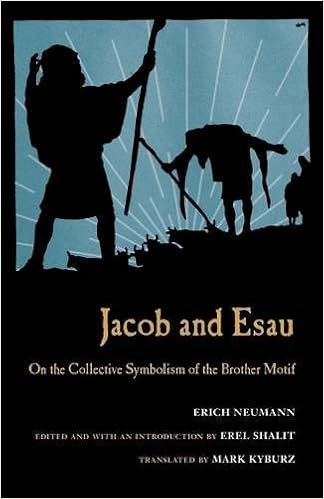
Neumann’s slim but brilliant book, Jacob and Esau: On the collective symbolism of the brother motif, was recently published by Chiron in collaboration with Recollections. 
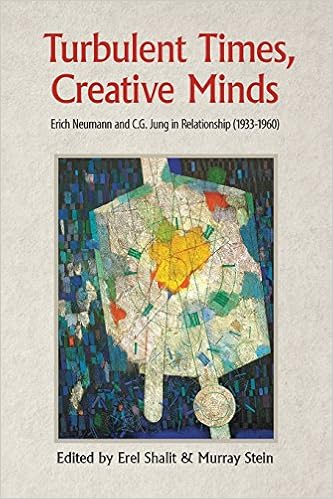
A volume of essays by prominent Jungians, as well as members of the Jung and Neumann families, has also een published by Chiron/Recollections. It is edited by Erel Shalit and Murray Stein, Turbulent Times, Creative Minds: The relationship between Erich Neumann and C.G. Jung (1933-1960). 

Ann Conrad Lammers
Soon, in late 2018 or early 2019, Routledge will publish Neumann’s major treatise on The Roots of Jewish Consciousness in an impressive two-volume set (Volume 1 on the psychological significance of revelation, Volume 2 on Hasidism), edited by Ann Lammers, and translated by Mark Kyburz with Ann Lammers. This work, written between 1934 and 1945 but never published, is a treasure trove, a wealth of pearls. Although Neumann mined its themes in several of his Eranos lectures, the work as a whole holds a unique place in his opus.

Further announcements will be posted as the work of translation and editing progresses, but here is a taste of Neumann’s writing:
... for Hasidism the world consists of a great, diffusely distributed creative nothingness, whose points of concentration, in varying degrees of power, reshape and form this unformed energy and cause it to shine. These points of concentration are the world's individuals, created in the tzimtzum, having a smaller and greater circumference and varying energy charge. They can also diminish or increase the extent and intensity of their radiance, depending on the level they attain, that is, their ability to enter into contact with divine nothingness.
Read more about Erich Neumann's The Roots of Jewish Consciousness
Read more about Erich Neumann's Jacob and Esau: On the collective symbolism of the brother motif
Read more about Turbulent Times, Creative Minds: The relationship between Erich Neumann and C.G. Jung (1933-1960)

Cover painting by Mordecai Arnon
Cover image silhouette by Meir Gur Arieh


Etching by Jacob Steinhardt


Tuesday, March 14, 2017

C. G. Jung and Erich Neumann: The Zaddik, Sophia, and the Shekinah, by Lance Owens

Dr. Lance Owens has written an important paper on aspects of the feminine, which he generously offers for free download at the www.academia.edu site.


The paper was originally presented at the symposium 'Creative Minds in Dialogue: The Relationship between C. G. Jung and Erich Neumann,' held at Pacifica Graduate Institute, Santa Barbara, June 24-26, 2016 (see also here).

On April 27, 2017, Dr. Owens will present on Neumann and the Feminine, together with Rina Porat, Jungian Analyst, session four of the Asheville webinar series ERICH NEUMANN – HIS LIFE AND WORK AND HIS RELATIONSHIP WITHC.G. JUNG.


Erich Neumann and C. G. Jung each affirmed that Western civilization was at the threshold of an epochal transformation. Jung proclaimed in Answer to Job that the initiation of a new age demanded the “anamnesis” – the “remembering” – of the primordial feminine archetype of Sophia.  Neumann recognized the task of remembrance as an awakening to call of the exiled Shekinah.   Working from personal perspectives distinctly rooted in their own unique Christian and Jewish heritages, both men sought to liberate feminine Wisdom from the exile inflicted by theological, patriarchal and primarily logocentric cultural paradigms.  We will briefly review the story of Sophia and Shekinah, and consider how Jung and Neumann engaged this primal feminine image in their lives and their psychological writings.

Lance S. Owens is a physician in clinical practice and an historian with focused interest in C. G. Jung and Gnostic traditions. Since release of the Red Book: Liber Novus in 2009, Dr. Owens has published several historical studies focused on the intimate relationship between Jung’s collected writings and the visionary experiences recorded in the Red Book and the Black Book journals.  He is the creator and managing editor of The Gnosis Archive, gnosis.org, the primary Internet archive of classical Gnostic sources, including the Nag Hammadi texts.

The Search for Roots: C. G. Jung and the Tradition of Gnosis by [Ribi, Alfred]

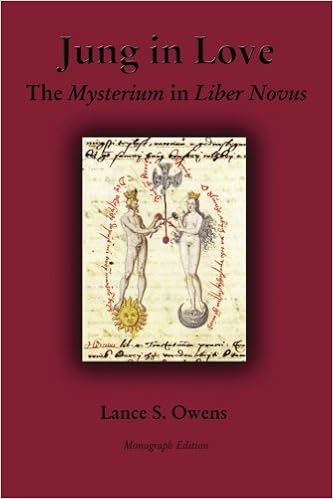
Jung in Love can be purchased at Amazon, or downloaded here.
The Search for Roots is also available at Amazon, as well as downloaded here. 


Erich Neumann's Jacob and Esau: On the collective symbolism of the brother motif, and Turbulent Times, Creative Minds: Erich Neumann and C. G. Jung in Relationship are available at Amazon.


Saturday, February 18, 2017

Erich Neumann:Jacob and Esau - on the collective symbolism of the brother motif


Cover image from a silhouette by Meir Gur Arieh


An introduction on YouTube to 


Encouraged by Jung, in his book on the collective symbolism of the brother motif, Neumann began outlining ideas that he eventually would develop in some of his major works, such as Depth Psychology and a New Ethic. Neumann uses the story about Jacob and Esau to illustrate the polarities in the human soul, between introversion and extraversion, profane and sacred, the moon and the sun, both in Jewish tradition and universally, and the need to integrate the shadow, as illustrated in Jacob seeing both God’s face and his hostile brother in his struggle with the angel. In Jungian terms, we see the inevitable conjunctio of Self and Shadow. 
The book can be seen as a brilliant midrash, retelling and interpretation of the Biblical motif of the brothers.

Etching by Jacob Steinhardt


Erich Neumann: Jacob and Esau - on the collective symbolism of the brother motif  on Amazon

Friday, February 10, 2017

C. G. Jung and Erich Neumann: Paintings from the Psyche


A Five-Part Webinar Series

Click Here to Register for the Series or Watch the free First Webinar

Next Seminar Thursday, February 23rd @11AM ET:

ERICH NEUMANN – HIS LIFE, WORK and RELATIONSHIP WITH C.G. JUNG

 Nancy Swift Furlotti will show and compare paintings by Neumann that have recently been discovered with some of Jung’s paintings in The Red Book. For both men, painting represented an engagement with the unconscious and a central feature of their individuation processes. There will also be references to Neumann’s writings on art and artists with the assistance of Murray Stein.


Active imagination was the technique C. G. Jung developed to amplify images from his dreams and visions. It allowed him to delve deeper into the mythical and collective layers of human imagination to more specifically understand what the psyche was trying to communicate. He used this extensively while on his own inner journey described in, The Red Book, and encouraged his patients and colleagues to do so, as well. Erich Neumann was one of Jung’s foremost disciples. After commencing analytical work with Jung, he kept a dream journal and began using active imagination on his own dream images. Somewhat later he, too, began to paint these images creating a long series, much like those in Jung’s Red Book. The comparison between the two sets of paintings is striking in both their differences and similarities. We will explore a full image series from each one as a way of gleaning a deeper understanding of the psychic processes of these two prominent analysts and good friends.


Turbulent Times, Creative Minds
Erich Neumann and C. G. Jung in Relationship

This volume of essays by well-known Jungian analysts and scholars provides the most comprehensive comparison to date between the works of C.G. Jung and Erich Neumann. Reflections are based on their extensive correspondence recently published, their differing cultural backgrounds, and the turbulent times surrounding their personal and professional relationship. Among the many specific subjects discussed are Jung and Neumann on art and religion, their views on the problem of evil, and clinical aspects of Neumann’s work. Also included are personal memories of both Jung and Neumann family members.
The book includes exclusive photos from Eranos, and several illustrations in color.

Contents:

Introduction (Erel Shalit and Murray Stein) ix
I. The Correspondence (1933–1960)
Uncertain Friends in Particular Matters: The Relationship between C. G. Jung and
Erich Neumann (Martin Liebscher) 25

Companions on the Way: Consciousness in Conflict (Nancy Swift Furlotti) 45

Neumann and Kirsch in Tel Aviv: A Case of Sibling Rivalry? (Ann Lammers) 71

II. Cultural Backgrounds
German Kultur and the Discovery of the Unconscious: The Promise and Discontents of the German-Jewish Experience (Paul Mendes-Flohr) 83

Basel, Jung’s Cultural Background and the Proto-Zionism of Samuel Preiswerk (Ulrich Hoerni) 95

The Cultural Psyche: From Ancestral Roots to Postmodern Routes (Erel Shalit) 111

III. Troubled Times
Carl Jung and Hans Fierz in Palestine and Egypt: Journey from March 13th to
April 6th, 1933 (Andreas Jung) 131

1933—The Year of Jung’s Journey to Palestine/Israel and Several Beginnings (Thomas Fischer) 135

Jungians in Berlin 1931–1945: Between Therapy, Emigration and Resistance (Jörg Rasche) 151

IV. The Problem of Evil
The Search for a New Ethic: Professional and Clinical Dilemmas (Henry Abramovitch) 167

Erich Neumann and C. G. Jung on “The Problem of Evil” (Murray Stein) 185

V. Neumann and Eranos (1948–1960)
Neumann at Eranos (Riccardo Bernardini) 199

“Dear, dear Olga!” - A Letter to Olga Fröbe-Kapteyn (Julie Neumann) 237

VI. On the Arts
The Great Mother in Israeli Art (Gideon Ofrat) 245

Jung, Neumann and Art (Christian Gaillard) 261

The Magic Flute (Tom Kelly) 299

A Brief Comment on Neumann and His Essay “On Mozart’s ‘Magic Flute’” (Debora Kutzinski) 309

VII. Clinical Contributions
Erich Neumann’s Concept of the Distress-ego (Rina Porat) 315

Can You Hear My Voice? (Batya Brosh Palmoni) 333

Neve Tzeelim—A Field of Creation and Development (Rivka Lahav) 347

VIII. On Religion
Erich Neumann and Hasidism (Tamar Kron) 367

Theological Positions in the Correspondence between Jung and Neumann (Angelica Löwe) 385

IX. On Synchronicity
Toward Psychoid Aspects of Evolutionary Theory (Joseph Cambray) 401

X. “Memories from My (Grand)Father’s House”
Introduction 411
Some Memories of My Grandparents (Andreas Jung) 413
Memories (Ulrich Hoerni) 415
Memories (Micha Neumann) 417
Memories (Ralli Loewenthal-Neumann) 421
Memories (Debora Kutzinski) 425
A Response (Thomas B. Kirsch) 429
Remembering the Mamas and Papas (Nomi Kluger Nash) 433
Memories of Max Zeller (1904–1978) (Jacqueline Zeller) 437

Bibliography

About the Contributors

Cover image by Mordecai Ardon

Available at Amazon, and at Chiron


***********
Jacob and Esau 
On the Collective Symbolism of the Brother Motif (2nd printing)
by Erich Neumann

cover image by Meir Gur Arieh


Saturday, September 10, 2016

Turbulent Times, Creative Minds: Erich Neumann and C.G. Jung in Relationship (1933-1960)

Erich Neumann at his desk


Now Available!
Turbulent Times, Creative Minds 


This volume of essays by well-known Jungian analysts and scholars provides the most comprehensive comparison to date between the works of C.G. Jung and Erich Neumann. Reflections are based on their extensive correspondence recently published, their differing cultural backgrounds, and the turbulent times surrounding their personal and professional relationship. Among the many specific subjects discussed are Jung and Neumann on art and religion, their views on the problem of evil, and clinical aspects of Neumann’s work. Also included are personal memories of both Jung and Neumann family members.

Sections:
I. The Correspondence (1933–1960)
II. Cultural Backgrounds
III. Troubled Times
IV. The Problem of Evil
V. Neumann and Eranos (1948–1960)
VI. On the Arts
VII. Clinical Contributions
VIII. On Religion
IX. On Synchronicity
X. “Memories from My (Grand)Father’s House”


Available at Amazon, and at Chiron


***********
Jacob and Esau 
On the Collective Symbolism of the Brother Motif (2nd printing)
by Erich Neumann

cover image by Meir Gur Arieh 


title page image by Jacob Steinhardt


Wednesday, August 17, 2016

C.G. Jung and Erich Neumann: Conflict, Philia, and Finding the Other in Oneself

Steve Zemmelman's Profile Photo


Steve Zemmelman has written an excellent review of Erich Neumann's recently published book Jacob and Esau: On the collective symbolism of the brother motif.


In his review, "C.G. Jung and Erich Neumann: Conflict, Philia, and Finding the Other in Oneself," he writes:

Jacob and Esau: On the Collective Symbolism of the Brother Motif is a creative and highly psychological interpretation and extrapolation from the biblical story. The review locates the development of this essay within the relationship between Jung and Neumann, as well as Neumann's own development as a German Jew and analytical psychologist. It shows the origins, within his amplifications of the Jacob and Esau story, of many seminal concepts in Neumann's thinking that became his legacy within Jungian theory, including the ego-self axis and the work on integration of the shadow that was to become Depth Psychology and a New Ethic.


Steve Zemmelman, MSW, PhD, is a Jungian analyst and member of the C. G. Jung Institute of San Francisco who practices in San Francisco and Berkeley. He is an associate clinical professor in the Department of Psychiatry at the University of California at San Francisco. He has a passion for the value of exploring the intersection of spirituality and psychology, particularly the Jewish mystical tradition. He is the author of eighteen published papers, including “C. G. Jung and the Jewish Soul” in the Winter 2012 edition of JUNG JOURNAL: CULTURE & PSYCHE and “Containing a Jungian Light: The Books of Erel Shalit,” in the 2015 Eranos edition of Spring Journal. Correspondence:.


Saturday, August 13, 2016

Should psychologists and psychoanalysts speak about politics?

Should clinicians and mental health professionals remain with in the closed vessel of the consulting room, or should they step outside these confines and express themselves regarding trends that are taking place in society and the world, about elections and candidates, about democracy and the characteristics of different regimes?

Psychoanalysts such as Freud, Jung, Winnicott, Erik Erikson, Erich Fromm, Erich Neumann and others have often stepped outside the consulting room and looked at the world and society around them.

C.G. Jung writes in his preface to "Essays on Contemporary Events,"

The storm of events does not sweep down upon him [the doctor] only from the great world outside; he feels the violence of its impact even in the quiet of his consulting-room ... 
As he has a responsibility towards his patients, he cannot afford to withdraw to the peaceful island of undisturbed scientific work, but must constantly descend into the arena of world events, in order to join in the battle of conflicting passions and opinions...
For this reason the psychologist cannot avoid coming to grips with contemporary history, even if his very soul shrinks from the political uproar, the lying propaganda, and the jarring speeches of the demagogues.

It is in this spirit I have written The Hero and His Shadow: Psychopolitical Aspects of Myth and Reality in Israel, and Requiem: A Tale of Exile and Return. I also relate to this in 'The Cultural Psyche: From Ancestral Roots to Postmodern Routes,' in the volume Turbulent Times, Creative Minds: Erich Neumann and C.G. Jung in Relationship (eds. Erel Shalit and Murray Stein). Another recent book well worth mentioning is A Clear and Present Danger: Narcissism in the Era of President Trump, edited by Leonard Cruz and Steven Buser.


The Hero and His Shadow: Psychopolitical Aspects of Myth and Reality in Israel introduces a psychological perspective on the history, development, and myths of modern Israel.

The realization of Zionism relied on the pioneer, who revolted against the Way of the Father and sought spiritual redemption through the revival of Mother Earth in the ancient land. Myth and history, psyche and matter are constantly intertwined in the birth and development of Israel, for example when in the Declaration of Independence we are told that pioneers make deserts bloom, the text actually says they make spirits blossom.

Pioneer, guardsman and then warrior were admired hero-ideals. However, in the shadow of the hero and the guiding myths of revolt, redemption, strength and identity-change, are feelings of despair, doubt, weakness and fear.  Within renewal, lurks the threat of annihilation.

Suppressed aspects of past and present myths, which linger in the shadow, are exposed. Psychological consequences of Israel’s wars, from independence to the present war of terror, are explored on a personal note and from a psychoanalytic perspective. Shadow aspects of the conflicting guiding myths Peace and Greater Israel are examined, as well as mythical connections, such as between Jerusalem and the respective archetypal images of Wholeness and Satan.


Elizabeth Clark-Stern writes:
Psychiatrist Carl Jung wrote in The Red Book of the distinction between “The Spirit of the Times” and “The Spirit of the Depths”. We see this vividly demonstrated when we put Ari Shavit’s acclaimed new book My Promised Land: The Triumph and Tragedy of Israel alongside Erel Shalit’s classic work, The Hero and His Shadow: Psychopolitical Aspects of Myth and Reality in Israel. The former takes us through the history of the heroic creation of Israel, including the darkest “shadow” behaviors of the Jewish state in the 1948 massacre of the Arabs of Lydda.
In the latter work, Erel Shalit tells us why.
This is no simplistic psychological analysis. The brilliance of this Israeli Jungian analyst is that he offers no easy solutions, plumbing the paradox of the necessary heroic identity of the Jewish state, and yet, around every corner is the shadow of every hero: the beggar, the frightened one, the part of all of us that is dependent on forces outside of our control.
It is also very important to note that Erel Shalit’s book is fascinating reading for anyone interested in the inner workings of the soul. On one level Israel is the backdrop for the author to explore how shadow, myth, and projection work in all of us, regardless of our life circumstance, nationality, environment, or history. It even includes a comprehensive glossary of Jungian terms that has some of the best definitions I have ever encountered, and hence a find for readers new to Jung.
And, of course, for people who are fascinated by the scope and depth of the story of Israel, this is a simply great read. It stands alone, but read as a companion to Ari Shavit’s My Promised Land, Erel Shalit’s Hero and His Shadow gives us The Spirit of the Depths in all its dimension. We may not be able to resolve the Arab/Israeli conflict, but we can learn many things from this brave, complex Israeli author, that we can apply to healing the inner and outer wars in our own lives.


Requiem returns us to an eternal theme, a dialogue with Soul, and we know quite well what happens when one dialogues with Soul—we change, consciousness is enlarged, the impossible becomes possible and we no longer are compelled to blindly follow in the deathly path of our forefathers.

Requiem is a fictitious account of a scenario played out in the mind of many Israelis, pertaining to existential reflections and apocalyptic fears, but then, as well, the hope and commitment that arise from the abyss of trepidation. While set in Israel sometime in the present, it is a story that reaches into the timelessness of history, weaving discussions with Heine and Kafka into a tale of universal implications.

Artist Junko Chodes writes:

From the first pages of this book, the tone of a masterpiece emerges powerfully.
This book makes us realize that the "Israel problem" cannot be understood in a journalistic frame of mind. Politics, war, land, culture, and contemporary experience are expressions of the deep core of human life, the core of the human soul.
This is an important book for anyone who thinks about "cultural identity" and the love of one's own country and culture.


Saturday, January 30, 2016

Erich Neumann: Jacob and Esau - Now available!

Jacob returns to the Holy Land after 20 years in Haran. He sends angel-emissaries to Esau in hope of a reconciliation, but his messengers report that his brother is ready for war, with 400 armed men. Jacob prepares for war, prays, and sends Esau a large gift to appease him.

That night, the family of Jacob crosses the Jabbok River, while he remains behind and encounters the angel that embodies the spirit of Esau, with whom he wrestles until daybreak. Jacob suffers but vanquishes the supernal creature, who bestows on him the name Israel, “he who prevails over the divine.”

The Biblical account seems then to condense time, possibly indicating the significance of the proximity between the struggle with the angel and the meeting with Esau. Upon lifting his eyes, it says, Jacob saw in front of him Esau and his men, and bowed to his brother. Esau embraced him, and the two brothers kissed and wept in each other’s arms. Having found grace in his brother’s eyes, Jacob insisted on giving Esau his gifts, for “I have seen your face, as though I had seen the face of God.” 
Based on this verse, Neumann elaborates on God and Esau, shadow and Self. In fact, this is the peak of his psychological study of the hostile brothers within the human soul, and forms the basis of his new ethic.

Silhouette by Meir Gur-Arieh. 
Copyright Meira Gur-Arieh Kein
In 1934, Erich Neumann, considered by many to have been Carl Gustav Jung's foremost disciple, sent Jung a handwritten note: "I will pursue your suggestion of elaborating on the 'Symbolic Contributions' to the Jacob-Esau problem . . . The great difficulty is the rather depressing impossibility of a publication." Now, eighty years later, in Jacob and Esau: On the Collective Symbolism of the Brother Motif, his important work is finally published.

In this newly discovered manuscript, Neumann sowed the seeds of his later works. It provides a window into his original thinking and creative writing regarding the biblical subject of Jacob and Esau and the application of the brother motif to analytical psychology.

Neumann elaborates on the central role of the principle of opposites in the human soul, contrasting Jacob's introversion with Esau's extraversion, the sacred and the profane, the inner and the outer aspects of the God-image, the shadow and its projection, and how the old ethic - expressed, for example, in the expulsion of the scapegoat - perpetuates evil.


Mark Kyburz, co-translator of C. G. Jung's The Red Book, has eloquently rendered Neumann's text into English. Erel Shalit's editing and introduction provide an entrée into Neumann's work on this subject, which will be of interest to a wide range of readers, from lay persons to professionals interested in Jungian psychology and Jewish and religious studies.

Erich Neumann was born in Berlin in 1905. He emigrated to Israel in 1934 and lived in Tel Aviv until his death in 1960. For many years he lectured and played a central role at Eranos, the seminal conference series in analytical psychology. His writings include Depth Psychology and a New Ethic, The Origins and History of Consciousness, and The Great Mother. The correspondence between C.G. Jung and Neumann was published in 2015.

Erel Shalit is a Jungian psychoanalyst in Israel and founding director of the Analytical Psychotherapy Program at Bar Ilan University. He is the author of several books, including The Cycle of Life: Themes and Tales of the Journey, Enemy, Cripple and Beggar, The Complex, and The Hero and His Shadow - available at Amazon, Fisher King Press, and other online book sellers.

Mark Kyburz specializes in scholarly translation from German into English and is the co-translator of C. G. Jung's The Red Book (2009). He lives and works in Zürich, Switzerland.

This unique book can now be ordered from Amazon (hard copy, paperback and kindle), Book Depository, Barnes and Noble, or directly from Chiron.

A wood cut by Jacob Steinhardt.
Copyright Yosefa Bar-On Steinhardt. 

Tuesday, July 21, 2015

Containing A Jungian Light: The Books of Erel Shalit - by Steve Zemmelman

The following is an excerpt from the introduction of Steve Zemmelman's comprehensive review of five of my books, in the latest issue of Spring Journal (which is a particularly interesting issue; for content, see here).

I am deeply grateful to Steve for writing so beautifully - this comprehensive review is a poetic paper in itself.

Dr. Steve Zemmelman

Containing A Jungian Light: The Books of Erel Shalit
by Steve Zemmelman

Dance me to the children who are asking to be born.
Dance me through the curtains that our kisses have outworn
Raise a tent of shelter now, though every thread is torn.
Dance me to the end of love.

I was listening to these lyrics from a song by Leonard Cohen during the time I was reading Erel Shalit’s books for this review, and it struck me how well these poetic lines capture the essential tension between fragmentation and wholeness as they reference past, present and future. They orient the listener to limitation and in so doing suggest a depth of meaning that can only come from facing the inevitability of mortality and the potential for redemption through love. The tune in which the lyrics are embedded is a lamentation with a distinctly Jewish sensibility. It leaves me moved, tearful, despairing and hopeful, all at once. It is soulful, satisfying, and true. It seemed so fitting a soundtrack for a day in which Shalit’s work was so much pulsing through me.

Introduction

It has been my great pleasure over the past year to have studied the body of Erel Shalit’s written work. While at first it felt like an overwhelming task to creatively review a body of work by a highly regarded and prolific colleague, I approached the task I was invited to take on as a unique opportunity for learning and creative reflection.

The effort was more than amply rewarded. In his books one encounters a master interpreter of Jung’s many contributions to depth psychology illuminating a wide range of topics in ways that both present Jung’s foundational psychological thinking and amplify his mythopoetic approach to the soul. Jung’s work navigates between the empirical and the imaginal, engaging with each perspective as both an impetus for and a limitation to the other. Shalit’s work stands solidly in this territory, taking Jung’s original, creative thinking and building upon it, simultaneously enlarging it and nailing it down. While the density of his writing style can be challenging at times, requiring the reader to slow down and ponder the meaning of the words, more often Shalit’s words sing with a poetic, intuitive perspective that grips the reader and leaves him in a state of deep appreciation for the opportunity to contemplate an issue or problem from a new, more enriching, vista.

His books should find their way into many courses on Jungian psychology and analytic training programs as they offer both clear explications of basic concepts without falling into the trap of overly concretistic definitions, as well as thoughtful and scholarly interpretations and amplifications that illustrate and deepen the ideas being discussed. In addition, seasoned analysts can also learn much from these books, about themselves and their patients, and can make good use of these books in teaching this material to others.

• • • • •

In addition to his integration of Jewish knowledge into analytical psychology, Shalit writes as an Israeli deeply troubled by the polarizations in the Middle East, turning the lens of analytical psychology toward the forces and tensions that have shaped Israel from the time of its socialist pioneers in the early 20th century to the present. He makes extensive use of the concepts of projection and shadow in their many forms to call for more humane and just relations between Jews and Palestinians that echoes the call for integration of the shadow by his fellow countryman and first generation Jungian analyst, Erich Neumann, which one finds in his classic work, “Depth Psychology and a New Ethic.” One sees also in Shalit’s work a deep wrestling from the point of view of Joseph Henderson’s ideas about the cultural complex as links are drawn between the intrapsychic and social/cultural dimensions of life.

• • • • •

To read the full review, please do purchase the current issue, or enter a subscription to Spring Journal


If you are interested, you find my books on Amazon. You can also find several of them at the Fisher King Press online bookstore, where you can pay by credit card, PayPal, and your Amazon.com account. (That’s right, you can now pay for your Fisher King Press book orders from the website with your Amazon.com account.)


Forthcoming this fall: 
Erich Neumann: Jacob and Esau - On the collective symbolism of the brother motif
Edited and with an introduction by Erel Shalit
Translated by Mark Kyburz