Thursday, December 12, 2013

Review of ‘On the Doorstep of the Castle,’ a play by Elizabeth Clark-Stern


I often find it difficult to read a play in book form. However, the gripping drama of Elizabeth Clark-Stern’s ‘On the Doorstep of the Castle’ comes across in a vivid and powerful way in this intense book.

The imagined meeting between the historical Teresa of Avila, and the fictional Alma de Leon carries the intensity of searching souls. There is beauty coupled with pain, for instance when Alma, the young converso woman seeks to become a Carmelite nun, “Such a lovely name. From the hermits of Mount Carmel [God’s Vineyard], in the holy land. It is said they drank water from the fountain of Elijah, lived on berries, their only concern, love. I have a cousin called Elijah. He fled in exile to Jerusalem when we were but thirteen. His family refused to submit to conversion.”

The meeting between the two, Teresa the real figure, and Alma, based on the Jewish philosopher Edith Stein, who converted to Christianity, yet exterminated in Auschwitz, movingly and deeply reflect the meeting of the Soul’s Voices.

Nearly every paragraph brings a different turn in their encounter, whether the Jew in the Christian and the Christian in the Jew, the feminine faces of the God-image, the teacher in the disciple, as well as the various aspects of exile and return.

Both figures in the play are captivating. Alma, so splendidly conjured up in the author’s mind, is a merger between Edith Stein and a fictional descendant of Moshe de Leon, author of the Zohar (the Book of Splendor), the central treatise of the Kabbalah. As the author points out, Alma is ‘soul’ in Spanish. In Hebrew, Alma is ‘maiden’ (like Kore in Greek) – pertaining to the concealed, hidden, unknown (virginity) – and perhaps, as well to the word for eternity (Olam, in Hebrew spelled like Alma). Quite pertinently, in Lindsey Rosen’s moving postscript, Alma turns up in a mysterious way, perhaps synchronistically.

Elizabeth Clark-Stern says so profoundly that as we arrive at a new developmental stage in our lives, we find ourselves ‘On the Doorstep of the Castle.’ This book/play takes place right there, in our search for “the innermost castle” (p. 65). This is a meditative book – read it!

Erel Shalit, author of Requiem: A Tale of Exile and Return.

Thursday, December 5, 2013

"The Hero and His Shadow- A Necessary Companion to Ari Shavit's 'My Promised Land'"


A Review By Elizabeth Clark-Stern

Psychiatrist Carl Jung wrote in The Red Book of the distinction between “The Spirit of the Times” and “The Spirit of the Depths”. We see this vividly demonstrated when we put Ari Shavit’s acclaimed new book My Promised Land: The Triumph and Tragedy of Israel alongside Erel Shalit’s classic work, The Hero and His Shadow: Psychopolitical Aspects of Myth and Reality in Israel.

The former takes us through the history of the heroic creation of Israel, including the darkest “shadow” behaviors of the Jewish state in the 1948 massacre of the Arabs of Lydda.

In the latter work, Erel Shalit tells us why.

This is no simplistic psychological analysis. The brilliance of this Israeli Jungian analyst is that he offers no easy solutions, plumbing the paradox of the necessary heroic identity of the Jewish state, and yet, around every corner is the shadow of every hero: the beggar, the frightened one, the part of all of us that is dependent on forces outside of our control.

It is also very important to note that Erel Shalit’s book is fascinating reading for anyone interested in the inner workings of the soul. On one level Israel is the backdrop for the author to explore how shadow, myth, and projection work in all of us, regardless of our life circumstance, nationality, environment, or history. It even includes a comprehensive glossary of Jungian terms that has some of the best definitions I have ever encountered, and hence a find for readers new to Jung.

And, of course, for people who are fascinated by the scope and depth of the story of Israel, this is a simply great read. It stands alone, but read as a companion to Ari Shavit’s My Promised Land, Erel Shalit’s Hero and His Shadow gives us The Spirit of the Depths in all its dimension. We may not be able to resolve the Arab/Israeli conflict, but we can learn many things from this brave, complex Israeli author, that we can apply to healing the inner and outer wars in our own lives.

Reviewed by Elizabeth Clark-Stern, author of On the Doorstep of the Castle, Out of the Shadows, and Soul Stories.

Wednesday, December 4, 2013

Jung and the Great Maggid


Dov Baer of Mezeritch, the successor to the Baal Shem Tov, the founder of Hasidism, was known as "The Great Maggid (preacher)."

Like the Baal Shem Tov, also Dov Baer left no writings of his own. However, a relative of his, Solomon ben Abraham, collected his teachings.

As quoted from Aryeh Kaplan, in one of his teachings the Maggid says,
Nothing can change from one thing to another [without first losing its original identity]. Thus, for example, before an egg can grow into a chicken, it must first cease totally to be an egg. Each thing must lose its original identity before it can be something else.
Therefore, before a thing is transformed into something else, it must come to the level of Nothingness.

In his Seven Sermons to the Dead, Jung says,
“Nothingness is the same as fullness. In infinity full is no better than empty. Nothingness is both empty and full. This nothingness or fullness … is nothing and everything … both beginning and end of created beings.” Later on, Jung makes it clear that, “God and devil are the first manifestations of nothingness,” and in fact, like empty is no different than full, God and devil are one, until consciousness sets them apart.

In an interview on his 80th birthday, Jung says,
 "But do you know who anticipated my entire psychology in the eighteenth century? The Hassidic Rabbi Baer from Meseritz, whom they called the Great Maggid. He was a most impressive man."
The Maggid died 241 years ago, December 4, 1772.

Monday, November 25, 2013

James Hillman and Tikkun Olam

James Hillman; photograph
by Bill Ballenberg, NYT

The concept of ‘tikkun olam’ (Hebrew), which means ‘repair of the world’, takes its origin in rabbinical literature and Lurianic Kabbalah. It refers to the pursuit of social justice, such as protection of the disadvantaged.

James Hillman’s maternal grandfather, Rabbi Joseph Krauskopf was an early, prominent Reform Rabbi, and from Dick Russell’s excellent biography, we learn to what a great extent Hillman listened to the voices of the ancestors, as well as being the very individual thinker he was.

Rabbi Joseph Krauskopf

In an interview with the author Dick Russell, Hillman says,
“When I say I do therapy of ideas, it is to repair bad ideas, broken ideas, forgotten ideas. That’s an indirect way of restoring or repairing the world, though it isn’t necessarily by social action. Also, the very idea that the world is broken, alienated from its source— although I don’t follow the Jewish idea that its source is in God, but that it has fallen away from its archetypal and mythical sources, foundations.”
From The Life and Ideas of James Hillman: Volume I: The Making of a Psychologist, by Dick Russell.
Rabbi Krauskopf and Leo Tolstoy

For all lovers of James Hillman – The Life and Ideas of James Hillman is THE book! Dick Russell has written a biography that reads like a novel, and brings the spirit of Hillman to the soul of his writings.
         

Recently, picking up Hillman's Healing Fiction, a postcard from many years ago that I had forgotten about fell out of the book. It warmed my heart even more so, in a slight hope to contribute a bit more to the repair of the world and cause less damage; "there is much to do," as Hillman says, much to repair.


Sunday, November 24, 2013

Agreement reached in Geneva

"For the first time in nearly a decade we have halted parts of Iran's nuclear program"
(Barack Obama)

Agreement reached in Geneva
By Barak David, Haaretz Nov. 24, 2013 | 2:03 PM 

"Most Israeli officials denounce 'bad' nuclear deal; Peres says 'time will tell'; Lieberman: Israel must consider alternative allies; Gal-On gives positive repsonse: Deal slows down fast track to bomb."
Read article in Haaretz


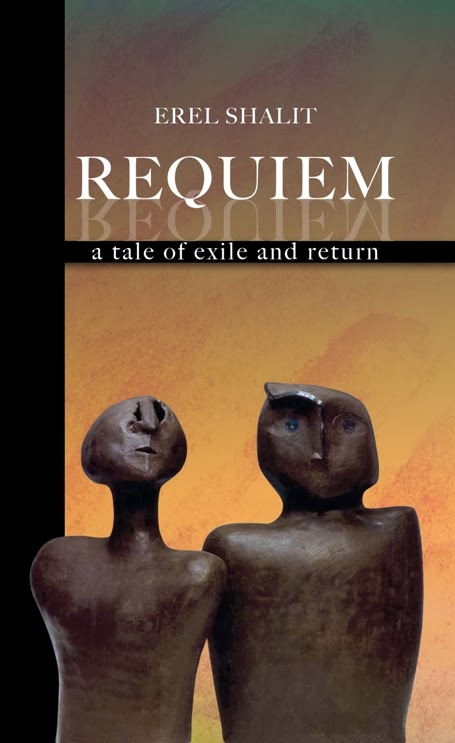
How does Israel live in the shadow of nuclear threat? A fictitious scenario is described in the metaphysical novella Requiem: A Tale of Exile and Return:
…

It seemed the Iranian leaders were biding their time. Intelligence confirmed that Iran had the bomb, or at least was very close. Having learned from the Israelis, the Iranians enforced a policy of deliberate ambiguity as regards their weapons capacity, maintaining they had already reached nuclear capability for peaceful means. Both Iran and Syria had greatly expanded their stocks of chemical missile warheads. Russia and China warned Israel of severe sanctions if it would attack, and the government had realized that an attack most likely would miss the target(s), and serve as pretext for counter-attacks on all fronts. There was a widespread feeling that the day of the bomb was coming closer.

Tel Aviv, known for its vibrant night-life, now saw hedonistic farewell parties for friends leaving, and parties celebrating “Gog and Magog,” “Doomsday,” and “Who will close the light at the airport?”

Missiles and rockets were fired from Gaza, often from schools and mosques, with the Israeli Air Force trying to target the militants. At one occasion a school was indeed hit, killing six small girls. The case was brought to the United Nations Security Council, which, surprisingly to many despairing Israelis, did in fact condemn the killing of civilian Israelis (in the course of time, just like during the events of 2000-2005, Israeli hospitals and schools, places of entertainment and worship, had been hit. Suicide-bombers now seemed to favor kindergartens and old age homes). However, “this could under no circumstances serve as a pretext for unnecessary and indiscriminate violence against the civilian Palestinian population, including children.” Libya and Pakistan were to head a special United Nations Human Rights delegation to investigate Israel’s frequent breaches of international law. Egypt and Jordan decided to freeze diplomatic relations.

While previously a few rockets and missiles had been the daily barrage from Gaza on Israeli towns and villages nearby, now not only the range and the precision of the missiles had been greatly increased, but at least thirty rockets were fired daily. One hit the oil depot in the Ashdod port’s fuel storage facilities, causing severe damage and closure of the port. The town was temporarily evacuated.
…

“We may then ask which steps can be taken to prevent the threat of catastrophe?” was the question Professor Shimeoni intended to ask his audience, since the purpose of his story was to ring the bell of urgency, by presenting a worst-case scenario.

“Is it not paradoxical,” he thought, “that the Arabs of the Land are hostages to the Iranian leader’s doomsday calls. As long as they induce hope in him of victory, he need not press the button.” He felt this was but one of those enigmatic manifestations of an order he could not really grasp, yet it accentuated his sense of devotion, and his intent to listen to his Inner Voice.

He imagined the loneliness of those who once upon a time had really been only a very few, and his heart pounded strongly when he thought of the vibrant industriousness and creativity in Israel, which were so striking in the shadow of genocidal threat.

Suddenly he interrupted his stream of thoughts, and wondered how his words would reverberate in him, were he to listen to his own lecture. Imagining himself in the audience, the remarkable picture of the Sabbath evening service in Bergen Belsen, a few days after liberation, crystallized before his eyes. While the dead and the dying still lie on the ground, the barely living survivors let their voices rise from the ashes into divine Hope, ...


Tuesday, November 19, 2013

Ari Shavit – the unique voice of sanity of Israel’s all too silent majority


Ari Shavit is one of Israel’s most well-known and respected journalists, yet his voice is different. He might be termed a moderate left-winger, but the division between left and right does in many ways injustice to the spectrum of views among Israelis, which is infinitely more varied, nuanced and complex than one would think, considering the governments over the last several decades.
Ari Shavit

Shavit expresses what he himself calls “the third approach that internalizes both intimidation and occupation… triumph and tragedy,” the tension between fear and uncertainty, on the one hand, creativity, assertiveness and hope on the other. Among journalists and political commentators, he has the unusual integrity of looking into the many problems and shortcomings of a troubled country without dismissing it, and its many achievements and its vitality, without being carried away by arrogance and denial.

Order Ari Shavit's My Promised Land at Amazon.

For the many who love Israel, and are open to the pain without falling into depression, and to the joy without flying too near the sun, and who want to learn in depth about Israel and be touched by its complexity, I highly recommend this wonderful and important book. Erel Shalit, Author of Requiem: A Tale of Exile and Return; and The Hero and His Shadow: Psychopolitical Aspects of Myth and Reality in Israel.

This ever-timely and powerful book [The Hero and His Shadow] delineates a psychological view of the collective processes that underlie the creation and development of the State of Israel and the relationship between the individual and collective processes up to the present time. (From Journal Of Analytical Psychology )

The title of this meditative book, REQUIEM: A Tale of Exile and Return', seems inappropriate when the reader begins Erel Shalit's story: if these are the thought patterns that are seething through the mind of our narrator Professor Eliezer Shimeoni as he prepares a lecture on the fate of Israel and the fate of the Jews, why then open with a 'Christian' mass for the dead? But then we are reminded that this is yet another work by the author of Enemy, Cripple and Beggar, and his life's work is not only as a Jungian Pyschoanalyst in Israel but he is also a man consumed with the great literature and the important writers of the world.

He begins this story simply enough as Professor Shimeoni reflects on the history of the Jews post WW II, ... 'That very moment he understood why the passionate longing for home had anchored in the Jewish soul, and why the sense of the soul's exile wandered like a shadow behind every Jew.' He quotes the words of Chaim Potok 'To be a Jew in this century is to understand fully the possibility of the end of mankind, while at the same time believing with certain faith that we will survive.' ...

... what Erel Shalit has accomplished in this very brief but intoxicating book is to provide a path for each of us to follow, wisely using the plight of the Jews during the last century as a matrix from which to judge our own individual exile and return. He is an accomplished thinker and he is also a very brilliant writer. —Grady Harp

Monday, November 18, 2013

Jan Wiener: Money Matters and their Impact on the Transference


Jungian Psychoanalyst Jan Wiener (SAP London), visited the Bar Ilan Jungian Psychotherapy Program, and gave a very rich and greatly appreciated lecture on “The World through Blunted Sight: Money Matters and their Impact on the Transference,” based on her chapter in Transformations: Jung's Legacy in Clinical Work Today (Cavalli, Hawkins, Stevns [Eds.])
And who, when it comes to the crunch, can live with a heart of gold?
(Carol Ann Duffy (1999) Mrs Midas from The World’s Wife)

Introduction 


The paucity of literature about the role of money in analysis is startling, particularly since the exchange of money through analytic fees is a central aspect of the frame in which an analytic relationship may develop. Shortly after qualifying at the end of the 1980s, a colleague and I wrote a paper called The Analyst in the Counting-House: Money as Symbol and Reality in Analysis (Haynes and Wiener 1996). The paper explored the neglect of any serious study of the role and meaning of money, reflecting with some puzzlement on the absence of due attention to fees and the meaning of money during training. The situation now, almost twenty years later, has not altered significantly, suggesting that for analysts money continues to be ‘the last taboo’ (Dimen 1994), and more difficult to contemplate even than the emotional subjects of sex or death. There is a remarkable lack of interest in the subject of money, or more likely, that thinking about money continues to represent an area full of conflicts and unresolved complexes for analysts who, it may be said, tend to suffer from ‘moneyblindness’ (Lieberman and Lindner 1987). Jacoby (1993), in a paper called, Is the Analytic Situation Shame-Producing highlighted the shame-inducing nature of the analytic relationship because of its artificial inequality, but without any reference at all to the part that the fee could play.

In his book, The World through Blunted Sight, Patrick Trevor-Roper (1970: 17-63), a Consultant Eye Surgeon, writes of the ‘unfocused image’ of people with poor sight and explores how optical anomalies, blunted sight as he calls them, can affect both perceptions of the world and the personality of those with visual impairments. He compares (ibid: 31) how Keats, who was known to be short sighted, focused on auditory subjects such as Ode to a Nightingale and On the Grasshopper and the Cricket, with Shelley, who had good vision and whose romantic imagery concentrated on the more distant evocations of the sky and the mountains. It is the unfocused image of money, its effects on the analyst and specifically on the transference and countertransference landscape with which this chapter is concerned.

From Ch. 5, Transformations: Jung's Legacy in Clinical Work Today