Showing posts with label soul. Show all posts

Friday, November 24, 2017

The Sun and the Sword, The Moon and the Mirror

The Sun and the Sword,
The Moon and the Mirror

by Erel Shalit

Besides the more commonly accounted for masculine, solar aspect of the hero’s journey, we may refer to a feminine, lunar attribute as well. They represent different attitudes vis-à-vis the unconscious.

The sun-hero has a dual relationship to the Great Mother, as exemplified by Heracles; his name means Glory of Hera, yet the goddess drives him to madness. He sets out on the mission to break free from the bonds of the Great Mother, to face her magnitude, ready to draw his sword in combat with her however awesome she seems to be, and to enhance his ego-consciousness. The sun-hero, while not always able to fulfill the entire mission of his journey, works towards replacing id and the unconscious with ego. He must abandon the comfort and the security of the kingdom of childhood, about which Jung writes:
For him who looks backwards the whole world, even the starry sky, becomes the mother who bends over him and enfolds him on all sides ... As such a condition must be terminated, and as it is at the same time an object of regressive longing, it must be sacrificed in order that discriminated entities - i.e., conscious contents - may come into being.(1)
On his way to consciousness the hero encounters monstrous and malicious obstacles that, as Jung says, rise in his path and hamper his ascent, wearing “the shadowy features of the Terrible Mother, who saps his strength with the poison of secret doubt and retrospective longing.”(2) He risks being devoured by the Earth Mother, destroyed by the gods, to burn in the flames of passion set afire by the nymphs, or die in battle with his competing Martian warriors. His world is patriarchal, goal-directed and lawful, thus he may lose direction and plunge into unconsciousness, teased and tantalized by the feminine seductress intruding from afar, as became the tragic fate of Samson.

It is the sun-hero’s undertaking to break away, to free himself from the archetypal world.
Cover image by @ Susan Bostrom-Wong
Simultaneously, as part of his mission, he must gather the strength required to bring the very same archetypal energy into the ego and human consciousness. Thus, the hero has one foot in divinity, one in the world of mortals. It is the hero’s task to dismember the archetypal energies and transpose them as increasingly human complexes into the personal world and the realm of the ego. This is what Prometheus does when he brings fire to man. His name means forethinker; the Promethean fire is the capacity to plan the use of that natural transformative energy, fire, for the benefit of mankind, to create consciousness and acculturation, heating and cooking, creating new materials and fresh ideas.(3) But also when the complex has become autonomous, split-off from consciousness and detracting energy from the ego, the hero is called for. The man who compulsively clung to a job far below his capabilities because of his fear of losing it was constantly threatened by dismissal until he gathered his strength to fight the complex that nearly destroyed him.

The sun-hero may be the obstinate two-year-old who repeatedly says no and no to being dressed, “I dress.” Or the five-year-old who pulls the hero’s phallic sword with which he fights the beasts within—as they are projected upon the little kindergarten-brutes of the real world without. The sun-hero is unmistakably masculine, a He, whether a boy or a girl.

The solar hero brings something new, something formerly unknown into the consciousness of the individual or that of society. By means of the adventures of the sun-hero, man has, for instance, accomplished scientific achievements and expanded geographical boundaries. The solar aspect of the hero pertains to patriarchal consciousness. With his sword, the hero cuts and divides, which is structurally essential for the establishment and expansion of consciousness.

But there is a lunar aspect or phase of the hero’s journey as well, which may likewise unfold when the hero abandons the conventions of the royal throne and the safe rule of ego, when he stands up against and turns away from collective consciousness. This is the case, for instance, with Buddha, whose way is enlightened by reflection rather than by the splendor of the sword. It pertains to conceiving, rather than “deliberate doing,” and, says Neumann, “time must ripen, and with it, like the seeds sown in the earth, knowledge matures.”(4)
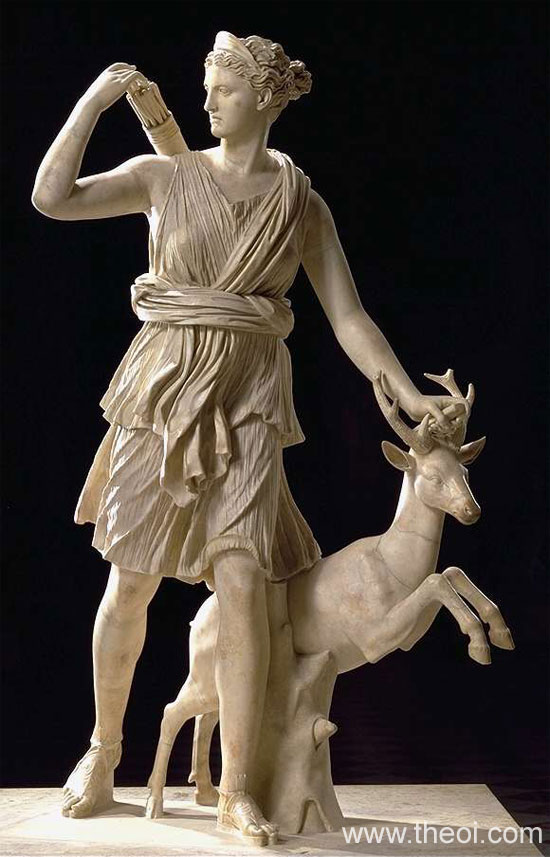
This is the moon-hero. He, or in fact She, because it pertains rather to the feminine, whether in man or woman, ventures into the dangerous paths, the forests and the rivers, the hills and the valleys, the labyrinths and the netherworlds, the pandemonium, the chaos and the torment outside the boundaries of collective consciousness, beyond norms and conventions. She is maybe not the skillful goal-directed archer Apollo, but rather his twin sister Artemis, the hunter goddess roaming in the wilderness and the forest, armed with silver bow and arrows. This may be the sense of drifting around the outskirts of town, sneaking into backyards, to hike around in foreign places in the geography of the world or in the psychography of the soul, learning “how to observe nature, the way it grows and changes.”(5) It is dangerous; as happens to Artemis, by mistake, you may kill your loved one, or if you come too close you may be transformed into a stag, because it is an oscillating journey between death and rebirth, waxing and waning, appearance and disappearance, love and disaster, reflection and deflection, healing and wounding. The ground easily quakes, and on winding roads and behind thorny bushes the forces of love and madness, pain and desire, despair and anticipation struggle with savage ferocity. The lunar hero pertains to relationship and unification, but breakup and falling apart, as well.

The hero’s lunar quality refers to the mirror and reflection, rather than the sword and division. As we shall see later, Perseus is equipped with both.

In its lunar aspect, the hero does not attack the unconscious. It entails a conscious turning towards the unconscious, quietly and humbly awaiting what in the course of time arises and unfolds in the hero’s reflective mirror. As Campbell says:
The mirror, reflecting the goddess and drawing her forth from the august repose of her divine non-manifestation, is symbolic of the world, the field of the reflected image. Therein divinity is pleased to regard its own glory, and this pleasure is itself inducement to the act of manifestation or “creation.”(6)
The following is the dream of a sixty-year-old man, slowly finding his way home to himself after having “been away” for a long time, during an extraverted career:
I feel an urge to return home. I have been away for a long time. As I get home, I see that a man sits on a chair in the attic, watching the dark sky through a telescope—there is a big opening in the roof. He calls me to look, and I try to look carefully through the telescope, but I see nothing. I turn and turn the telescope, yet, I can’t see anything. He shouts and yells at me and I feel very embarrassed, and he tells me angrily to go and sit and wait next to a little girl who sits on a bench. She looks like she is in a dream state, just looking up at the sky. First I look at her, and then I lose the focus, and like her I just look at the dark sky, and then, suddenly, a very bright star shines far far away but very very clearly, and then I see the moon, so close, almost as if I could touch it.
Naturally, the lunar aspect of the hero is closely related to matriarchal consciousness, as elaborated in depth by Erich Neumann.(7) Queen Jocasta, Shining Moon, as representative of the feminine side of consciousness, has been discussed elsewhere.(8) However, Neumann is mainly concerned with matriarchal or moon-consciousness as something preceding patriarchal consciousness, pertaining to “enchantment and magic, ... inspiration and prophecy” rather than “its recurrence in the psychology of individuation, which is a reappearance at a higher level, as is always the case where, in the course of normal development, we again encounter something already experienced.”(9) I believe the lunar and the solar elements constitute complementary aspects of the hero and his/her journey, even if the one may precede or dominate the other.

In fact, as regards the lunar aspect of the hero’s journey, he naturally ventures into darkness only as the sun sets, rather than at dawn. Yet, the hero needs to be equipped with some of the day’s light to withstand the night’s depressive darkness, and with summer’s warmth for the cold loneliness of winter not to overwhelm him.

He travels at night-time, west to east, in the reflective light of the moon rather than in the unambiguous light of day. “The alchemical work starts with the descent into darkness (nigredo), i.e., the unconscious” says Jung.(10) Only thereafter “one arrives at the east and the newborn sun,” says Edinger.(11) Ayala, a forty-year-old woman, dreams:
It is midnight, midsummer night. I am barefoot, walking from the sea eastward, on a thorny field. My feet hurt, I am bleeding. Then, suddenly, a path opens up, crossing the field in the centre, dividing it in two, lit up by the light of the moon. As I walk along, still feeling the pain in my feet, a man suddenly appears from the dark and blocks my way. He is religious, completely shrouded in his Tallith [the prayer shawl], even his head is covered. He barely notices me, and he does not move to let me pass. I have to stop and wait, and listen to him reciting a prayer. I look at him as he prays, and very quietly he looks at me, in a warm and kind way. I feel his quiet prayer fills me up within, and he then blows the shofar [the ram’s horn], and I feel a wave of excitement.
While the dream was experienced during an afternoon nap, it takes place during summer’s brief night. The dreamer is guided along her path by the moon. The peripeteia occurs when her road is blocked, but she need not actively struggle with her adversary. Rather, this woman, who had experienced a deep narcissistic wound due to lack of adequate mirroring in early childhood, allows herself in the dream to be mirrored by the religious man’s chanting prayer. Jung says:
Christ, or the self, is a “mirror”: on the one hand it reflects the subjective consciousness of the disciple, making it visible to him, and on the other hand it “knows” Christ, that is to say it does not merely reflect the empirical man, it also shows him as a (transcendental) whole.(12)
The dream-ego, the I in our dreams, is our recurrent nightly hero, our messenger who ventures into dreamland, and returns home with a letter from the Self.(13) In the above dream, Ayala encounters her adversary who emerges from the shadow, not as an enemy to be fought, but as a mirroring or reflecting other. This is the hero’s lunar rather than solar attribute. It may even be that the dream ego will not really bring anything new into consciousness, but her soul becomes inspired and excited, i.e., setting the breath of life in motion. From the lunar perspective, the event, such as in this dream, needs less to be interpreted, but rather be libidinized by the moisture of the Self.

(1) C.G. Jung, CW 5, par. 646.
(2)“The Dual Mother,” CW 5, par. 611.
(3) Shalit, The Hero and His Shadow, p. 151.
(4) Erich Neumann, The Fear of the Feminine, pp. 92, 94.
(5) Verena Kast, The Mermaid in the Pond, p. 55.
(6) The Hero with a Thousand Faces, p. 213.
(7) ‘The Moon and Matriarchal Consciousness,’ in The Fear of the Feminine, pp. 64-118.
(8) Shalit, The Complex, p. 55.
(9) The Fear of the Feminine, pp. 74, 92.
(10) CW 9ii., par. 231.
(11) Edward Edinger, The Aion Lectures, p. 116.
(12) CW 11, par. 427.
(13) The Talmudic dictum says: “A dream not interpreted is like a letter not read.”

This article is an excerpt from Enemy, Cripple, Beggar: Shadows in the Hero’s Path.

For a review of the book by Ann Walker in Psychological Perspectives, please see here.

Erel Shalit is a Jungian psychoanalyst in Tel Aviv, Israel. He is a training and supervising analyst, and past president of the Israel Society of Analytical Psychology (ISAP). He is the author of the novella, Requiem: A Tale of Exile and Return, and several other publications, including The Hero and His Shadow: Psychopolitical Aspects of Myth and Reality in Israel and The Complex: Path of Transformation from Archetype to Ego.


Saturday, July 8, 2017

Requiem: A Tale of Exile and Return


Requiem returns us to an eternal theme, a dialogue with Soul, and we know quite well what happens when one dialogues with Soul—we change, consciousness is enlarged, the impossible becomes possible and we no longer are compelled to blindly follow in the deathly path of our forefathers.

Requiem is a fictitious account of a scenario played out in the mind of many Israelis, pertaining to existential reflections and apocalyptic fears, but then, as well, the hope and commitment that arise from the abyss of trepidation. While set in Israel sometime in the present, it is a story that reaches into the timelessness of history, weaving discussions with Heine and Kafka into a tale of universal implications.

Requiem: A Tale of Exile and Return by Erel Shalit
Erel Shalit’s Requiem: A Tale of Exile and Return touched me deeply, deep into the waters of my soul. From that ocean, I will choose to mention a few of the many emerging waves.
The book traces historical events, in which the longing for home can be felt: a real home, a collective home, and the personal and internal home that the author aims at, by means of the narrator of the book, Eliezer Shimeoni.
This is his private odyssey, but in distinction from Ulysses, he chooses not to relate to the siren’s song as merely a danger, but rather as a call to make the journey towards the soul’s home.
Erel Shalit’s narrative has a unique, fascinating and powerful style, which touches you strongly. Particularly, he has a way of leading the reader to grasp complicated historical processes with unusual ease.
Interwoven in a narrative of fiction and seeming non-fiction, we meet familiar figures from philosophy and literature, such as Kafka, who asked his friend Max Brod to burn his books after his death, a wish which, to the great fortune of humankind, the latter did not fulfill. In Requiem the author brings us both to Heine and the burning of books, and back to the fate of Hananiah ben Terdion in the second century.
The story of the second-hand bookshop reminded me of Borges’s famous library; Shimeoni also found refuge in the many old books: “The old bookshop granted an escape into a world of history books and timeworn atlases in which he could sail across the sea of time and continents, where fear and excitement and heroism were free and asked no price. It was a world of books that he could browse but never buy, an odyssey that could only be traveled, but never owned.”
I was carried away by the ruminations of the protagonist who wonders if he was “a mere actor in the play? What he believed to be his own, free and individual will, his personal determination, his choice and his decisions, his own peculiar thoughts, were they nothing but the manifestation of his allocated role, the text he had been given, none of his own creation?” And, “Without soul, there is no water and no liquid, no stream, no steam, and perhaps also no dream, he told himself, almost speaking out loudly. Soul does not have material substance,” says Shimeoni in the book, in his Zen-like reflections. And he is reminded of the film Smoke, based on a script by Paul Auster. The film tells the story of Sir Walter Raleigh who asked Queen Elizabeth in the 16th century, “How do you weigh smoke?” Clever as she was, she supposedly answered him, “How can you weigh smoke? It’s like weighing air or someone’s soul,” we are told. But the narrator contemplates and eventually provides us with the surprising answer.
In Requiem we are presented with two distinct styles of writing, so that we are almost led to believe that two different authors wrote the book. We find not only the narrator of a story, but also the spiritual and lyrical face of the author.
I highly recommend this fascinating and important book, which presents the reader with the simultaneously intellectual and emotional landscapes of Erel Shalit.
                Marcela London, poet, author of The Beginning Was Longing (Hebrew, 2013)

The book is available at Amazon in English and in Hebrew

Tuesday, September 20, 2016

Redeeming the Feminine: Eros and the World Soul

Nancy Qualls-Corbett, Ph.D. is a practicing analyst in Birmingham, Alabama since 1981. A diplomat of the C.G. Jung Institute, Zurich, she is the author of The Sacred Prostitute: Eternal Aspect of the Feminine and Awakening Woman: Dreams and Individuation. She has also contributed to the book The Secrets of Mary Magdalene. Nancy combines her love of mythology and travel in teaching seminars in Greece, Italy, Egypt, and Canada.

Nancy Qualls-Corbett has contributed the chapter Redeeming the Feminine: Eros and the World Soul to The Dream and its Amplification.

Nancy says:
In the body of his work, Dr. C.G. Jung explains the dynamics not only the personal psyche and the personal association to one’s dreams but also the far reaching effects of the collective unconscious. These archetypal elements connect past and present that mirror a more universal aspect, the World Soul, the Anima Mundi. Redeeming the Feminine presents the dreams of a woman that depict not only the abuse and repression of the feminine principle, a term Jung referred to as Eros, but also how these vital images of psyche reflect the essence of the feminine principle onto a greater dimension. Her dreams also lead us to a more conscious understanding of how one may begin to redeem the feminine principle in one’s life and how that healing process may be reflected in the World Soul.
A Giant Dream© from an original painting
by Howard Fox www.howardfox.com

The Dream and Its Amplification unveils the language of the psyche that speaks to us in our dreams. We all dream at least 4-6 times each night yet remember very few. Those that rise to the surface of our conscious awareness beckon to be understood, like a letter addressed to us that arrives by post. Why would we not open it? The difficulty is in understanding what the dream symbols and images mean.

Through amplification, C.G. Jung formulated a method of unveiling the deeper meaning of symbolic images. This becomes particularly important when the image does not carry a personal meaning or significance and is not part of a person's everyday life.

Contents 

I. The Amplified World of Dreams - Erel Shalit and Nancy Swift Furlotti

II. Pane e’ Vino: Learning to Discern the Objective, Archetypal Nature of Dreams - Michael Conforti

III. Amplification: A Personal Narrative - Thomas Singer

IV. Redeeming the Feminine: Eros and the World Soul - Nancy Qualls-Corbett

V. Wild Cats and Crowned Snakes: Archetypal Agents of Feminine Initiation - Nancy Swift Furlotti

VI. A Dream in Arcadia - Christian Gaillard

VII. Muse of the Moon: Poetry from the Dreamtime - Naomi Ruth Lowinsky

VIII. Dreaming the Face of the Earth: Myth, Culture, and Dreams of the Mayan Shaman - Kenneth Kimmel

IX. Coal or Gold? The Symbolic Understanding of Alpine Legends - Gotthilf Isler

X. Sophia’s Dreaming Body: The Night Sky as Alchemical Mirror - Monika Wikman

XI. The Dream Always Follows the Mouth: Jewish Approaches to Dreaming - Henry Abramovitch

XII. Bi-Polarity, Compensation, and the Transcendent Function in Dreams and Visionary Experience: A Jungian Examination of Boehme’s Mandala - Kathryn Madden

XIII. The Dream As Gnostic Myth - Ronald Schenk

XIV. Four Hands in the Crossroads: Amplification in Times of Crisis - Erel Shalit

XV. Dreams and Sudden Death - Gilda Frantz

From a review by Marcus West, in Spring, 2014.
"This book is an exploration of the collective unconscious as witnessed, primarily, through dreams, … it is a celebration, … demonstrating the wisdom of this unconscious self.  
Every single chapter illuminates the process of the self, the collective unconscious and dreams. 
The book is rich and inspirational, encouraging us to trust in the wisdom of the psyche and to open ourselves to the lumen naturae of the self. I thoroughly recommend it."
The book can be purchased from Amazon or directly from Fisher King Press