Showing posts with label Quadrant. Show all posts

Friday, August 11, 2017

The Human Soul (Lost?) in Transition, at the Dawn of a New Era - Quadrant


This essay, in the Spring 2017 issue of Quadrant, examines the liminal phase of society and interiority in which we find ourselves today and poses several questions to the irrepressibly optimistic inventors of a techno-utopian future: Can we really be and feel happy if we need to be informed about it by a cellphone app? Do 93 million selfies a day replace a single moment of true reflection? How can we remain relatively integrated individuals in the transiency of the present?

The essay will be part of a forthcoming book.


From the introduction:
Jung says, “Whoever speaks in primordial images speaks with a thousand voices…,” and “In each of these images there is a little piece of human psychology and human fate, a remnant of the joys and sorrows that have been repeated countless times in our ancestral history…” (CW15, par. 129, 127).
The image, the images of interiority, cannot exist without the soul. In soullessness, in fundamentalism and totalitarianism there are no images.The existence of the soul, that elusive, purely poetical idea of anima, whether in man or woman, cannot be bound by earthly empires, neither by imperial rules nor by imperatives, but can only be poetically imagined, for instance, as that image of a mirror that mirrors the image.
But the soul also relies on the capacity of imagelessness, in the sense of an absence of externally generated images. In their discussion centered around Neumann’s manuscript on Jacob and Esau, Jung writes that “the ‘imagelessness’ [that is, of the God-image] is exceedingly important for the free exercise of intuition that would be prejudiced by a fixed image, and thereby rendered unusable.” (Jung and Neumann, 2015, p. 56).
While images take shape within our individual psyches, the image is not only within us, but we are also within the image, as Henry Corbin says (Cheetham, 2003, p. 71). We reside within an image of the world, within the world soul, and we relate to the world according to the images, ideas and perspectives that we have developed, and to a large extent, according to the views and the spirit of our times.
When listening to the brilliant young men and women at the forefront of progress, those that hold the trigger to the chips and the apps of the future, one cannot refrain from being amazed at the firm belief and complete conviction that technology is the remedy of all ills and the foundation of all future viruses – sorry! virtues, not viruses.
This essay is an attempt to cause a slight crack in the confidence of the young, and perhaps it is merely an old man’s pathetic envy of tomorrow’s triumphant heroes, to whisper in their ears, “you are also mortals.” .....

Quadrant, Spring 17 - Volume XLVII:1

— Kathryn Madden
— Shaun McNiff
— Erel Shalit
— Brandon J. O'Neil
— Elizabeth Colistra
— Roger Peasley
— 
Beth Darlington, review editor. Reviews by Deborah Stewart, Mark Dean, and Chris Beach


Saturday, June 3, 2017

Quadrant: The Journal of the C.G. Jung Foundation

Quadrant offers essays grounded in personal and professional experience, which focus on issues of matter and body, psyche and spirit. Major themes of Jung’s work are explored through mythological, archetypal and alchemical motifs and images, as well as through historical, scientific, clinical, and cultural observation.


Current Issue: Fall 16

Volume XLVI:2
— Kathryn Madden
— Carole Lindberg
— Robert Mitchell
— Monica Luci
— Donald R.Ferrell

— Clifford Mayes
— Beth Darlington, Review Editor
Reviews by Laurie Schapira, Maryann Barone-Chapman, and Wendy Neville Jones


For further information about Quadrant, and an index of issues, articles and authors, here.

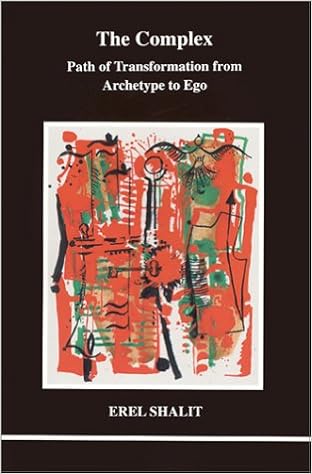
In 2006, Quadrant published a paper I wrote together with James Hall, 'The Complex and the Object: Common Ground, Different Paths,' based on my book The Complex:  Path of Transformation from Archetype to Ego
The next issue will feature another essay of mine, 'The Human Soul (Lost?) in Transition, at the Dawn of a New Era,' which will be part of a forthcoming book of that name.


The Complex and the Object: Common Ground, Different Paths — 
Erel Shalit and James Hall

While complex and object are part of everyday psychoanalytic discourse, the meaning of the terms varies with different approaches, and the relationship between the concepts is far from apparent. Specifically, in this paper the Jungian complex and the Kleinian internal object are compared. It is the view of these authors that the internal object is primarily related to the archetypal image, and the internalized object to Jung's concept of imago. The complex is the central concept that in a well-defined model of the psyche dynamically unites the phenomena described by these concepts. Furthermore, while in neurotic conflict the struggle between the ego and autonomous complexes takes place on the battlefield of the subjective psyche, in the personality disorders the complex is projected “wholesale” onto the external object, turning the other into a “complex-object.”
The Complex is available on Amazon.