Showing posts with label Middle East. Show all posts

Tuesday, October 3, 2017

Netanyahu's shameful government

President Reuven Rivlin attends the state ceremony
marking 44 years since the Yom Kippur War. (Mark Neyman/GPO)

Not a single member of Netanyahu's government saw it fit to honor the memorial service to the fallen soldiers of the Yom Kippur War, held at the military cemetery at Jerusalem's Mount Herzl, on October 1, 2017. When contacted by the organization commemorating the fallen soldiers, the office of the PM responded that the ministers are very busy.

Ehud Barak expressed outrage at the ministers’ absence, “This is shameful and infuriating. This shames the soldiers who died. Where were Bibi and his ministers? Too busy making political appointments or at a political ceremony in Gush Etzion? This is a new low.”
 Ehud Barak further noted that a government that "forgets the fallen soldiers, will eventually fall and be forgotten."


Labor leader Avi Gabbay said, “A government that does not respect its past and does not have an impressive present does not have much of a future.” 


empty seats at the 10 million shekel
ceremony, Sept. 27, 2017

Netanyahu and his government did have the time - and the money, 10 million shekel - to arrange what they claimed to be a 'state ceremony', celebrating fifty years of settlements. They expressed outrage at the absence of the opposition, the High Court of Justice (as well as the President) from the ceremony, but managed to gather a merely 1600 attendees.


More than two thousand Israeli soldiers were killed in the Yom Kippur War, that began when Arab armies attacked Israel on October 6, 1973, on the holiest day of the Jewish year, and more than seven thousand were wounded. Considering that Israel's population in 1973 was 3,338,000, the number of killed would correspond to two hundred thousand in the US of today.


The following is an excerpt from The Hero and His Shadow: Psychopolitical Aspects of Myth and Reality in Israel:

Inflated Strength and Denial of Fear

Illusions of safety and self sufficiency were the result of excessive reliance on strength with concomitant denial of fear following the Six Day War.  President Sadat’s attempt to initiate negotiations in 1971 72 did not elicit an unambiguous Israeli response, because there was no real feeling of need.  The psychological frame of mind was such that no one seemed able to pose a threat to Israel, or even evoke fear.  Thus, despite Sadat’s repeated declarations that the coming year would be one of either war or peace, the warnings were foregone and the 1973 Yom Kippur War erupted in complete surprise to the Israelis.  As a consequence of such an illusion of self sufficiency and invulnerability, Israel’s leadership was unable to correctly interpret the intelligence at hand about imminent attack.  Like the entire Israeli collective, the leadership was caught in the dangerous psychological condition of fusion between the individual ego and the extended national or collective self. Personal and collective identities had merged, they were as if inseparable. The individual could (and, in fact, social undercurrents encouraged him to) identify with the national image of strength, omnipotence and fearlessness.  Even death was challenged.  Nothing could inflict harm or injury.  This state of psychological inflation affected the entire nation, including the political leadership, which was unable to differentiate itself from the collective process.  The leadership had fallen victim to the collective self-image of invincibility, and was therefore unable to prevent the war.  In striking contrast, following the Declaration of Independence, May 14, 1948, when the people rejoiced and danced in the streets, Ben-Gurion was gravely concerned with what lie ahead, contemplating the possibility of the Arab nations’ forthcoming attack.  In 1973, however, the process of redemption, of the individual ego merging with the collective self, had attained its tragic peak.
The position of strength, force, and power, disconnected from its opposite pole of loss and fear of annihilation, collapsed following the Yom Kippur War.  Since any trace of weakness might have threatened the sense of hubris, and therefore had been denied, the gap between reality and self-perception had reached unhealthy proportions.  With devastating clarity, the Yom Kippur War brought to light the weakness that lingered in the shadow behind the persona of strength and self sufficiency, by which the collective ego had become possessed.  The war brought forth the sense of loss and – again – the deeply rooted fear of ultimate destruction.  This, in turn, generated the release of strength and the will to survive.  The Yom Kippur War was the tragic outcome of a complex having taken possession of a nation’s collective consciousness.

The Yom Kippur War and Its Aftermath
From Ambivalence to Unconditional Ideology

The mood in the wake of the Yom Kippur War was entirely different than the triumph and euphoria that had followed upon the Six Day War. Israelis now found themselves depressed and in grief, the narcissistic illusion of grandiosity and invulnerability had shattered.  …


Contents

Preface       The Beggar in the Hero’s Shadow      
Chapter 1    Return to the Source               
Chapter 2    From My Notebook             
Chapter 3    From Dream to Reality             
Chapter 4    Origins and Myths             
Chapter 5    From Redemption to Shadow         
Chapter 6    Wholeness Apart               
Chapter 7    Myth, Shadow and Projection      
Chapter 8    A Crack in the Mask          
Chapter 9    The Death of the Mythical and the Voice of the Soul


Dedication of The Hero and His Shadow

I dedicate this book to those, all too many, whose voices were silenced by man’s evil.
   I dedicate it to those, all too few, who raise their voice against fascism, who speak up in the struggle for peace and reconciliation, especially between Palestinians and Israelis, incessantly on the verge of yet another cycle of violence and hostilities.

   I dedicate it to those who try to hold the vulnerable balance in that ultimate conflict of Abraham between Father and Son, divine and human, idea and implementation, past and future, ego and self.
   I dedicate this book to the daughters and the sons whose future is endangered.

Wednesday, June 7, 2017

Understanding the Israeli psyche


The Hero and His Shadow 
Psychopolitical Aspects of Myth and Reality in Israel


The Six Day War between Israel and Egypt, Syria and Jordan broke out on June 5, 1967, after Egypt had mobilized along the Israeli border, closed the Straits of Tiran to Israeli ships, and Israel was threatened by invasion of Arab forces. After a sweeping victory, Israel came to occupy large neighboring areas, but has since withdrawn from Sinai, Gaza and 40% of the West Bank. However, as victorious as Israel was, relieving the deadly threat, led by then Chief-of Staff Yitzhak Rabin, the prolonged occupation of territory in Judea and Samaria/the West Bank, is detrimental not only to the Palestinians, but to Israeli society as well.

The release of tension resulted in years of denial and inflation, as for instance expressed in the infamous words of General Shmuel Gonen (Gorodish), “We looked Death straight in the eye, and Death lowered its gaze,” (The Hero and His Shadow, p. 20), which crashed into the Yom Kippur War six years later.


 Contents

Preface       The Beggar in the Hero’s Shadow      
Chapter 1    Return to the Source               
Chapter 2    From My Notebook             
Chapter 3    From Dream to Reality             
Chapter 4    Origins and Myths             
Chapter 5    From Redemption to Shadow         
Chapter 6    Wholeness Apart               
Chapter 7    Myth, Shadow and Projection      
Chapter 8    A Crack in the Mask          
Chapter 9    The Death of the Mythical and the Voice of the Soul


Dedication of The Hero and His Shadow

I dedicate this book to those, all too many, whose voices were silenced by man’s evil.
   I dedicate it to those, all too few, who raise their voice against fascism, who speak up in the struggle for peace and reconciliation, especially between Palestinians and Israelis, incessantly on the verge of yet another cycle of violence and hostilities.
   I dedicate it to those who try to hold the vulnerable balance in that ultimate conflict of Abraham between Father and Son, divine and human, idea and implementation, past and future, ego and self.
   I dedicate this book to the daughters and the sons whose future is endangered.


Monday, May 22, 2017

Fake dealer, fake partners: Trump, Netanyahu and Abu Mazen


The Jubilee Paradox: 50 years since the Six Day War, 50 years of occupation
Jubilee: a special anniversary; especially a 50th anniversary.
Originally from the Hebrew yovel, the jubilee was a year of emancipation and restoration, celebrated every fiftieth year, with the emancipation of slaves. The jubilee year was proclaimed by the sounding of the shofar, the ram’s horn, the yovel (originally meaning ‘bellwether’), which also has lent its name to Yoval, “father of all who handle the harp and pipe” (Genesis 4:21), i.e., the Biblical father of music. The Jubilee Paradox is that the victorious Six Day War led Israel to occupy millions of Palestinians. Already in 1968 Ben Gurion said he preferred peace to occupation.


June 5-10, 2017 will mark fifty years since the Six Day War, in which Israel in a sweeping surprise victory defeated Egypt (UAR), Jordan and Syria, after Egypt had mobilized along the Israeli border, closed the Straits of Tiran to Israeli ships, and Israel was threatened by invasion of Arab forces.

The release of tension resulted in years of denial and inflation, as for instance expressed in the infamous words of General Shmuel Gonen (Gorodish), “We looked Death straight in the eye, and Death lowered its gaze,” (The Hero and His Shadow, p. 20), which crashed into the Yom Kippur War six years later.


And while Israel has withdrawn from Sinai following the peace agreement with Egypt, from 40% of the West Bank after the Oslo agreements, and unilaterally from Gaza, Israel still holds on to 60% of the West Bank, pouring in money to settlements, even beyond the settlement blocs along the so called Green Line, which will remain Israeli, possibly following land swaps with the Palestinian National Authority.

Occupation, now in its fiftieth year, will have to come to an end, for the sake of both Palestinians and Israelis. Occupation keeps both the occupied and the occupier captive in a condition that tears up the social fabric. In a complex condition, which I have called ‘within boundaries and without’ (The Hero and His Shadow), the geo-political and social circumstances intrude upon the psychological fibers of the individual.

In the jubilee year, the time has arrived to set the slaves free, which includes a majority of the Israeli population, which is ready to withdraw, does not want to rule over another people, but with hard work not only keeps Israeli society going in hi-tech and culture, but pays for the settlement project that many of them oppose.


Fake dealer, fake partners: 
Trump, Netanyahu and Abu Mazen


I pray I am wrong, but I doubt the "master dealer" will succeed where his predecessors failed, and bring the Israeli Palestinian conflict to a viable solution.


Update: In a conversation with Congressional aides, end of July, which was recorded and leaked to the website Wired, President Trump's senior adviser and son-in-law, Jared Kushner - "tasked with criminal justice reform, updating the government's technological systems, and creating peace in the Middle East," (Wired, Aug. 1, 2017) expressed hesitancy at the United States' ability to broker a peace deal between Israel and the Palestinians. read more.
Maybe more is required than hubris and arrogance?


Trump may perhaps be able to bring the partners to fake negotiations, all of them concerned with appearance, ‘the greatest show,’ but viable peace requires more substance than these partners are able to provide. None of them can provide the minimum of the other side’s demands. Mahmoud Abbas (Abu Mazen) does not trust Netanyahu, for good reasons, and is himself equally reluctant, since he is not likely to accept a demilitarized Palestinian state alongside Israel without any further claims on the Jewish state.

There could be a certain possibility of partial success if the strategy is changed to an incremental process of mutual small steps. Yet, stalemate inevitably leads to the eruption of violence (even though negotiations do not guarantee quiet – the terror instigated by the Palestinians during the Oslo negotiations should not be forgotten or denied).

In the likelihood of failed negotiations, it is up to a united Israeli opposition to present an alternative plan. Considering the locked situation, the initial issue on the agenda would be unilateral withdrawal from civilian occupation.

First, Israel would need to define a temporary border. In fact, the notorious security fence does this quite well; 9-13% of the West Bank remains west of the fence. That is, 87-90% of the West Bank remains outside the security fence, to establish a demilitarized Palestinian state with temporary, but near-complete borders.


© Shaul Arieli, http://www.shaularieli.com

Secondly, separate between civilian and military occupation:
a. Withdrawal from civilian occupation beyond the self-defined temporary border, and beyond the big settlement blocs; i.e., from close to 90% of the West Bank. Relocate the many small and scattered settlements - in which a minority (about 20%) of settlers reside, to inside the security fence, i.e., the self-defined, temporary but distinct border, preferably by offering compensation for voluntary relocation.

b. Retain military occupation for security needs, but step by step, increase the territory handed over to Palestinian civilian authority – and eventually, as well, security control. Practical and creative solutions to ensure security cooperation can be provided – some are already implemented. Each limited territorial step, as part of a long range plan, should be accompanied by steps of mutuality, agreed upon by both sides. If no agreement, no military withdrawal, until security control can be transferred. 
c. That is, unilateral civilian disengagement and withdrawal from occupied territories beyond the security fence, but negotiated step-by-step military withdrawal, with increased Palestinian security responsibility in those areas added to its sovereign territory.
Thirdly, in the long run, in order to ensure viability, low-level confederative frameworks of cooperation can be conducive, encompassing Gaza-Israel-West Bank/Palestinian Authority-Jordan.

The critical issue at this time is withdrawal from civilian occupation beyond the big settlement blocs (located along the cease-fire lines), while incremental withdrawal from military occupation can only take place with incremental agreements, based on mutual give and take between the two sides, backed by framework support by the larger Arab and international community.


Dedication of The Hero and His Shadow
I dedicate this book to those, all too many, whose voices were silenced by man’s evil.
   I dedicate it to those, all too few, who raise their voice against fascism, who speak up in the struggle for peace and reconciliation, especially between Palestinians and Israelis, incessantly on the verge of yet another cycle of violence and hostilities.
   I dedicate it to those who try to hold the vulnerable balance in that ultimate conflict of Abraham between Father and Son, divine and human, idea and implementation, past and future, ego and self.
   I dedicate this book to the daughters and the sons whose future is endangered.

Contents

Preface        The Beggar in the Hero’s Shadow       
Chapter 1    Return to the Source                
Chapter 2    From My Notebook              
Chapter 3    From Dream to Reality              
Chapter 4    Origins and Myths              
Chapter 5    From Redemption to Shadow          
Chapter 6    Wholeness Apart                
Chapter 7    Myth, Shadow and Projection       
Chapter 8    A Crack in the Mask           
Chapter 9    The Death of the Mythical and the Voice of the Soul
Glossary                            
Bibliography                       
Index


 "The Hero and His Shadow: Psychopolitical Aspects of Myth and Reality in Israel puts Israel’s recent history on the analyst’s couch with a particular focus on the intertwining development of individual and collective identity in the Jewish state.  It traces its vicissitudes from the absorption of the self within the idealism of the Zionist pioneers through a process of social and psychological maturation, eventually achieving what are likened to firm ego boundaries in the relationship between self and other, who, in the politics of the Middle East, is often seen as the enemy.  For me, it was a particular challenge and pleasure to read this book since, as an American Jew who is on a path of discovery about what it means in my life to be Jewish, there was a great deal here that I found new and challenging.  
I imagine that others with greater familiarity with the Jewish state and its history will be more familiar with much of the story but perhaps still find fascinating the ways the author is able to make use of a Jungian perspective to deepen the narrative.  Shalit offers an anamnesis that highlights the formative influences of image and mythology that infused the Zionist founders, tying them to the redemption of the desert lands in a socialist society passionately embraced along with a vision of a peaceful life with Arab neighbors.  The Hero and His Shadow offers an intelligent, sensitive, humanized perspective on the trajectory of events that led to the current tragic situation in the Middle East so specifically detailed in Ari Shavit’s recent book, My Promised Land
Shalit’s analysis reflects a skillful blending of the inner psychological and archetypal dimensions of the problem without collapsing it into a homogeneous whole.  He couples this with a particular sensitivity to the human cost and ethical failure of losing contact with the suffering face of the other, a theme which is also taken up in My Promised Land.  The central theme of Shalit’s book, however, is more psychological, focusing on the relation between hubris and nemesis, grandiosity and limitation, the projection of evil and the suffering of one’s own imperfection.  
This is not a book espousing a clear cut view of the complex problems in the Middle East, a situation in which there is no simple Archimedean perspective. In fact, if anything, Shalit’s analysis complicates those problems  – but in a helpful way that brings to light the confusion and conflicting dimensions of the inner (psychological) and outer (social historical) situation.  For example, while exploring the ways projection onto the enemy can serve both constructively in creating and maintaining ego boundaries as well as destructively in contributing to, or even creating, a state of denial and petrification, Shalit notes that relying on military strength “carries within it the seeds of vulnerability.” 
He then adds what I find to be an example of the kind of honest and grounded, practical observations throughout this book: that giving up force may be the result of a “misreading of the other.” In this light I find Shalit’s approach to be realistic and even-handed throughout, courageously and truthfully demonstrating the psychological underpinnings of militarization and religious fanaticism on both sides, the impact of the broader social and historical forces on the psychology of individuals and peoples, and the necessity for all sides to withdraw projections and wrestle with their fears and insecurities.  
There is a loss of relatedness for zealots on both sides of this conflict, each of whom are caught in destructive processes of splitting and projecting shadow onto the perceived enemy.  I particularly appreciated the emphasis on the need to transform the masculine warrior hero ideal to a more related, feminized Eros.  In one section where he discusses the yearning for a strong leader by Israelis and Palestinians who are gripped by terror and the tendency to see the world in terms of polarized opposites, Shalit comments, “peace…poses a threat to those who identify with the quest for grandiose wholeness and totality, in which there is no room for the other.”  I could not help thinking at the same time about the current situation in American politics where there is so much polarization and such limited capacity on the part of many to see self and other as part of the civic whole."

From a review in Spring Journal by Steve Zemmelman.


Available on Amazon


Saturday, June 7, 2014

The Moment of Historical Courage is Calling on Netanyahu


The negotiations between Israel and the Palestinian Authority ended, when PA President Abbas quit the talks at the moment of truth. Presented with far-reaching Israeli offers, he turned his back, as he has done before. The settlement freeze that Netanyahu reluctantly accepted at the beginning of Obama’s Presidency to bring the Palestinians to the negotiation table did not lead to anything – anyhow, wouldn’t negotiations in themselves be in the interest of all concerned?

President Abbas (whose term of presidency in fact expired in 2009) took unilateral steps (though I believe Israel should have welcomed the independent Arab State of Palestine), and has now formed a unity government with Hamas. 

One might wonder about the motives of President Obama in favoring terror groups like Hamas and Hezbollah as part of governing bodies - naivete, shadow, tactics...?

It must be clear to all that the technocrats provide a façade (or a farce) of legitimacy of a Hamas backed government.

While both these groups explicitly have the destruction of Israel on their agenda, also the charter of Abbas’s Palestine Liberation Organization calls for the end of Israel.


And honestly, when repeatedly declared that peace is possible only with Abbas and no one else on the Palestinian side, I doubt the validity of a one-man peace.

In the absence of democracy, I believe such a Palestinian government is a more truthful reflection of Palestinian sentiments than one-man Abbas. If the different militias are disarmed, the thousands of rockets aimed at Israel are assembled, so that the Palestinian Authority has one security force, not allowing for Hamas, Islamic Jihad and others to carry weapons or fire rockets, this would prove governing (if not elected) authority.

I am no great admirer of Netanyahu either. During the Oslo process, he participated in the incitement that took place against Rabin and the government, and during his terms as PM he repeatedly reaffirmed his right-wing and pro-settlement identity.

While on the one hand he punishes the Palestinians by allowing more building in settlements (much of which will fortunately not materialize, but merely serves as provocation), reports have it that he is contemplating far-reaching unilateral disengagement.


This may be your chance, PM Netanyahu! Unilateral disengagement fell in ill repute after the exit from Gaza, mainly because the illusion was that withdrawal from occupied territory would cause a positive response from the Palestinians, while it caused rains of rockets.

Just like Palestinian unilateral steps don’t bring peace, neither will territorial withdrawal. However, occupying another people, thus preventing the Palestinian Arabs from fully taking responsibility for statehood, causes chronic problems in Israeli society (cf. The Hero and His Shadow, Requiem).

My simple suggestion is thus:
  1. Declare the small area along the 1948 ceasefire line in which 80% of settlers live (and which in any peace agreement will be part of a land swap) to be part of Israel,
  2. Declare a complete settlement freeze beyond this area, where the majority of settlements, in which however a minority of settlers live – offer settlers who are willing to evacuate the possibility of compensation; the earlier they evacuate, the greater the compensation,
  3. Declare willingness to swap land for the areas held on to, at a future negotiated peace, but not until then,
  4. Unlike the full withdrawal from Gaza, military occupation (for instance to ensure that rockets are not fired from the West Bank into Israel’s Ben Gurion International airport) will remain until security arrangements and partial or full peace agreements are reached – only the civilian aspects of occupation, that is the settlements, will be evacuated until such times,
  5. Declare recognition of an Arab Palestinian State, whether independently in the West Bank and Gaza, or in federation with Jordan, and the willingness to establish joint financial and other projects to make such a state viable, in whatever shape the Palestinians themselves decide.

I am convinced additional creative suggestions can be brought to your attention, Mr. Netanyahu, but do act now to a de facto withdrawal from occupied territory, and divert the enormous waste of financial resources from settlements to affordable housing for the young inside Israel. You have the support of an overwhelming majority of Israel's population, and this will give you a well-deserved place in the annals of the history of modern Israel.


Saturday, February 5, 2011

REQUIEM ON THE NILE

The fire and the flames of revolt sweep across the Arab Crescent. Does the unrest herald the requiem of the Arab Kings? Perhaps these are the torches of democracy that are lit by the oppressed, the banners of freedom that defy non-elected rulers and dictators. Perhaps this proclaims the dawn of a new era, echoing the prospects and possibilities of change in the Middle East.

Or do darker forces linger in the shadow of hope and freedom, hiding behind the veils, holding their horses behind the courageous, ready to ride forth on the waves of uprising, when the time is ripe?

In Tunisia, Zine Ben Ali was ousted, but it seems the old guard and the army generals still hold on to power. The January Jasmine revolution simply led to a coup from within, likely generating reforms, but not necessarily a change of power or structure of the authoritarian regime. In Lebanon, the Hezbollah staged a coup, the Syrians threatened the Druze leader, and the Prime Minster was quickly ousted, replaced by a puppet in the hands of Iranian-directed Hezbollah, who now holds political and military power in the country.

In Egypt we witness the clash of major opposing forces:

From a Western perspective, democratic forces have risen against the dictatorial regime. Toward the end of his 30-year autocratic rule, Mubarak offers reforms, and cynically one may wonder, why did he not implement those suggested reforms during the decades he had the exclusive power to do so.

But no less perplexing, where were the voices of protest against Mubarak’s regime and its oppression of human and civil rights until now? Is it perhaps indicative that Egypt for decades was a member of the UN Human Rights Commission and its successor the Human Rights Council? Never did any of these bodies investigate or report on human rights violations in Egypt, while half of the Council’s critical decisions and resolutions on specific states’ human right’s records have been about Israel.

While Mubarak retained a cold peace with Israel, he not only refrained from visiting (except for the funeral of Itzhak Rabin), but did nothing to prevent hatred, or promote education toward peace – unfortunately similar to the Palestinian Authority.

From an Iranian perspective, this is the beginning of an Islamic renaissance in the Middle East, a movement toward removing the West’s autocratic puppet regimes.

And for a brief moment, Mohamed ElBaradei has returned to Egypt to play the temporary façade and front, the marionette of the different forces that believe that his Janus-face serve their interests, prominently so the Muslim Brotherhood, themselves speaking in different tongues. Only innocent desire, naïve hope and the blindness of denial award him a Nobel Peace Prize, until his persona of deceit, particularly as regards Iran's true intentions, was torn off by his successor at the International Atomic Energy Agency.

Egypt seems to reflect the forces that are played out across the Middle East: the people against the autocrats; army vs. Islamic fundamentalism. Also the Islamic revolution in Iran was initially an uprising against the oppressive regime of the Shah, until it became a revival of Islam. However, in spite of the similarity, there is a difference between Shia Iran and Sunni Egypt.

Democracy is more than elections. Yasser Arafat was elected, but never felt a need to stand for re-election. And following the West’s insisting on Palestinian elections, the result has been two governments and a military coup. Free elections are a manifestation, a symptom of democracy. Democracy is a state of mind, which evolves through the establishment of democratic institutions, parties, free press, and education. The transition to democracy can be sudden, since freedom is an archetypal need, just like the development of consciousness. But it requires a balance of forces. Democracy requires more than “one person, one vote, one time,” which may be the result of elections when non-democratic forces exploit a situation of confusion, depression and despair, as has happened in history, such as but not only Germany in the 1930s.

How will the present changes affect Israel? Geo-politically, it will likely not be easier. The cold yet strategically vital peace with Egypt, and the formal agreement between the countries may be in danger. Israel is likely to become even more alienated in the area, possibly emphasizing its identity as a Mediterranean country rather than a nation in the Middle East. The right in Israel will conclude that there really is no one to make peace with, and sigh in relief. The left, on the other hand, will claim the necessity and urge to move ahead toward agreements with the Palestinians.

Can similar uprisings to the ones in Tunisia and Egypt (and prior to that, the 2009 election protests in Iran, unfortunately much more weakly supported by the West), take place in Israel? (This is, in fact, is part of the story line Requiem: A Tale of Exile and Return.? Yes and no.

No, because Israel is a democracy, with freedom of expression, protest and free elections.

Yes, because democracy in Israel is a vulnerable balance between powerful forces. There is increasing reluctance of the majority to carry the extra-ordinary military and financial burdens of political stalemate and orthodox religious draining of state resources , enabled by a weak government paying for power (by giving in to corrupt coalition demands, rather than preserving integrity - leading to attempts to burden the majority with even heavier taxes).

Primarily, the Arab minority in Israel proper is torn between the benefits, in spite of longtime negligence, of living in Israel, and their identity as Palestinians. If major efforts are not made to bring greater equality and integration of the Arab minority, unrest seems inevitable.

And if Israel does not withdraw and define its borders in such a way that the Palestinians can establish a viable state based primarily in the West Bank, the country will find itself in a condition of permanent unrest and conflict between Jews and Arabs, lose its democratic basis and deteriorate internally and internationally.

The present government may turn its weakness into an asset, by considerably revising its policies, opening up toward sincere negotiations. The leaks from the previous government's negotiations with the Palestinian leadership simultaneously demonstrate the possibility of progress, and the difficulty finalizing an agreement. But stalemate will bring an end to the present government, since clearly these are times of change.

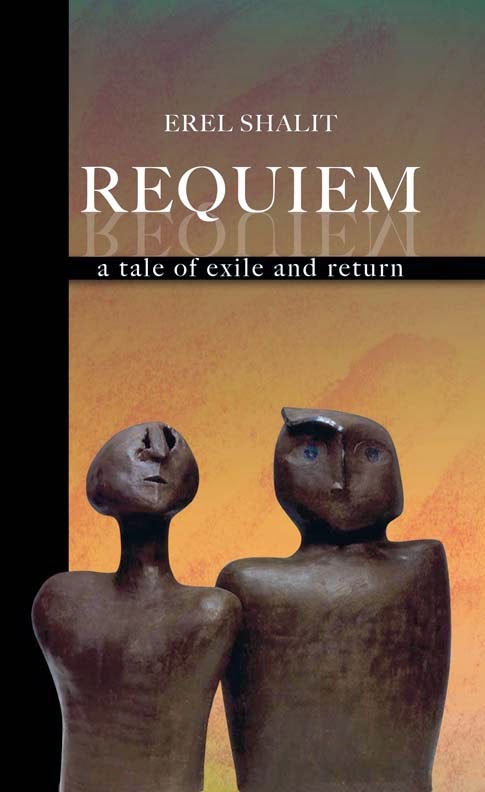
Requiem: A Tale of Exile and Return
is on sale now for $12.95, and Enemy, Cripple, Beggar is on sale now for $19.95 or $30.00 for the pair when ordered directly from the Fisher King Press. You can also order The Hero and His Shadow: Psychopolitcal Aspects of Myth and Reality in Israel directly from Fisher King Press. Phone orders welcomed, Credit Cards accepted. 1-800-228-9316 toll free in the US & Canada, International +1-831-238-7799

Sunday, October 10, 2010

Yom Kippur War Protocols


As Israel commemorates thirty-seven years to the Yom Kippur War, in which Egypt and Syria cleverly but deviously attacked Israel on the holiest day of the Jewish people, previously unreleased protocols from top secret emergency cabinet meetings have been made public.
They reflect how trapped the highest echelons were in the prevailing "concept," the post-Six Days War euphoria of invincibility.

At the cabinet meeting October 7, 1973, the day after the attack, Dayan admitted he had been wrong in his assessment of the enemy's objectives. However, "this is not the time for soul-searching. I underestimated the enemy's strength and miscalculated our forces' ability," he said.


Much soul searching has taken place in Israel since, but there is a constant need for soulful reflection and questioning, both on the Israeli side, the Palestinians, European as well as American leadership.

Politicians may challenge their rivals rather than reflect in depth, but a moment of introspection would probably do them little harm:

Does the present Israeli leadership, headed by Benjamin Netanyahu, truly want peace with the Palestinians? If so, what sacrifices are they willing to do to this end? It would, in fact, require of the PM to get rid of the quasi-fascist elements in his government, accept an extension of the settlement freeze, and reach out to form a coalition government with the centrist Kadima party headed by Tzipi Livni.

Do the Palestinians and their respective leaderships (PLO in the West Bank, Hamas in Gaza) recognize Israel's right to exist? To what extent do they, including the West Bank leadership headed by Mahmoud Abbas, still desire Israel's destruction, as one might conclude from the incitement and double-talk in Palestinian media?

To what extent does Europe exculpate itself from its historical guilt by demonizing Israel, where honesty in the media's portrayal of events is an increasingly rare commodity (one rare exception being a recent BBC inquiry - from which the UN so called Human Rights Council may learn - into the Gaza flotilla)?

To what extent do good intentions coupled with inexperience by the American leadership impair rather than encourage negotiations? The settlement freeze required by Israel as a precondition for the renewal of peace talks (while the Arab side rejected similar requests for concessions) delayed the talks for nearly a year, putting the Palestinian President in an unfortunate and untenable position.

The following is an excerpt from The Hero and His Shadow: Psychopolitical Aspects of Myth and Reality in Israel (p. 80-81):


Inflated Strength and Denial of Fear
Illusions of safety and self‑sufficiency were the result of excessive reliance on strength with concomitant denial of fear following the Six Day War. President Sadat’s attempt to initiate negotiations in 1971‑72 did not elicit an unambiguous Israeli response, because there was no real feeling of need. The psychological frame of mind was such that no one seemed able to pose a threat to Israel, or even evoke fear. Thus, despite Sadat’s repeated declarations that the coming year would be one of either war or peace, the warnings were foregone and the 1973 Yom Kippur War erupted in complete surprise to the Israelis. As a consequence of such an illusion of self‑sufficiency and invulnerability, Israel’s leadership was unable to correctly interpret the intelligence at hand about imminent attack. Like the entire Israeli collective, the leadership was caught in the dangerous psychological condition of fusion between the individual ego and the extended national or collective self. Personal and collective identities had merged, they were as if inseparable. The individual could (and, in fact, social undercurrents encouraged him to) identify with the national image of strength, omnipotence and fearlessness. Even death was challenged. Nothing could inflict harm or injury. This state of psychological inflation affected the entire nation, including the political leadership, which was unable to differentiate itself from the collective process. The leadership had fallen victim to the collective self-image of invincibility, and was therefore unable to prevent the war. In striking contrast, following the Declaration of Independence, May 14, 1948, when the people rejoiced and danced in the streets, Ben-Gurion was gravely concerned with what lie ahead, contemplating the possibility of the Arab nations’ forthcoming attack. In 1973, however, the process of redemption, of the individual ego merging with the collective self, had attained its tragic peak.
The position of strength, force, and power, disconnected from its opposite pole of loss and fear of annihilation, collapsed following the Yom Kippur War. Since any trace of weakness might have threatened the sense of hubris, and therefore had been denied, the gap between reality and self-perception had reached unhealthy proportions. With devastating clarity, the Yom Kippur War brought to light the weakness that lingered in the shadow behind the persona of strength and self‑sufficiency, by which the collective ego had become possessed. The war brought forth the sense of loss and – again – the deeply rooted fear of ultimate destruction. This, in turn, generated the release of strength and the will to survive. The Yom Kippur War was the tragic outcome of a complex having taken possession of a nation’s collective consciousness.


The Hero and His Shadow: Psychopolitical Aspects of Myth and Reality in Israel can presently be purchased from Fisher King Press at a 26% discount, or at  Amazon.

Tuesday, September 14, 2010

Hamas filmmakers present “The Liberation of Tel Aviv and Palestine”


A new video clip, gaining popularity in the West Bank and Gaza, depicts the take-over of Tel Aviv, renamed Tel-Arabiya, and the conquest of Israel. The High Court of Justice and the Bank of Israel buildings in Jerusalem are burned down.
After Israel is successfully attacked and "liberated," Palestinians are shown walking along the Tel Aviv promenade and on its streets. The height of the film is when the channel 2 TV studio has been taken over, its Israeli broadcaster replaced by a Palestinian, ready to declare the “liberation of Tel Aviv and Palestine.”

I doubt that the Palestinian filmmakers read my recent novella Requiem: A Tale of Exile and Return, which includes captions like,

Meanwhile, tens of thousands of demonstrators arrived in Jerusalem and Tel Aviv. It turned out that many policemen had simply remained at home, exhausted from the events of the last few weeks. Tel Aviv’s central Rabin Square and the surrounding streets filled up with demonstrators and banners, “Palestine for the Palestinians,” “One Palestine,” “Free Palestine.” Young boys climbed every pole and every pillar, raising the Palestinian flag. Soon the crowd started chanting “Tel Aviv, Tel Arab, Tel Aviv, Hill of Falastin.” (p. 82)

A recent article by prominent Professor Shlomo Avineri depicts a similar, fictitious scenario, in which the Jewish character of the country is progressively erased. The account, which, as Avineri says, will not happen, begins and ends as follows,

A radical Jewish leftist who supported the steps that led to the legislation turned to a head of an Arab organization and asked: "We did what you wanted, and you still aren't satisfied. What should we call the country so you'll really feel equal?" With a broad smile the head of the Arab association replied: "What's the problem? The real name was and always will be: Falastin."
(Shlomo Avineri: Biladi, Biladi – What's in a Name? (http://www.haaretz.com/print-edition/opinion/biladi-biladi-what-s-in-a-name-1.312848)

The Hamas film, Avineri’s article and my novella all deal with the threat to Israel’s existence. The UN partition plan in 1947 divided the land into two states, Arab Palestine and Jewish Israel. Tragically, the Palestinians still reject the recognition of Israel as a Jewish state. Likewise, the idea of two states for two peoples is impaired by the settlements beyond the security fence, comprising a majority of settlements but a minority of settlers.

A major purpose of mine has been to imagine a worse case scenario, which will not happen, but which can easily be imagined, and in the lack of constructive imagination and determined policies, creates fear and anxiety, on the one hand, fantasies and delusions, on the other. Therefore, my novella ends optimistically (for those who care about Israel's existence), since its survival relies on human traits and capabilities beyond either the fear or the wish for its extinction.

Review of Requiem: A Tale of Exile and Return, by Erel Shalit (posted on Amazon)

Slender, Succinct, Superb, February 3, 2010
By Edith Sobel (Fort Lee, New Jersey)

This slim but incisive novella is a philosophical but completely comprehensible take on contemporary Israel. From a "litany of lamentations" drawn from the current generation which appears to be the antithesis of their idealistic founding fathers, the thoughtful narrator Eli Shimeoni (about to give a lecture in New York) recounts his overriding despair - but eventually concludes with hope.
Elegantly and thoughtfully mourning today's saga of Israeli disillusion without hope, bitter alienation, and collapse of Zionist ideals, Shimeoni indicts the present movement out of the country for profit and the concomitant surrender of "soul."
But relying on the consistency of past Jewish history and the "triumphalism of hope" the reader reluctantly puts the book down - and smiles!

Requiem: A Tale of Exile and Return is on sale now for $14.95, and Enemy, Cripple, Beggar is on sale now for $17.95 or $30.00 for the pair when ordered directly from the Fisher King Press. You can also order The Hero and His Shadow: Psychopolitcal Aspects of Myth and Reality in Israel directly from Fisher King Press.

Phone orders welcomed, Credit Cards accepted. 1-800-228-9316 toll free in the US & Canada, International +1-831-238-7799

Fisher King Press / PO Box 222321 / Carmel, CA 93922

Friday, June 18, 2010

José María Aznar: If Israel goes down, we all go down


José María Aznar, Former Prime Minister of Spain, has written an important opinion piece in the Times, June 17, 2010. His position reflects truthfully how vulnerable and precarious the present situation is in Israel. While Israel possibly is equipped to deal with many of the threats the country presently encounters, the increasing demonization, which skillfully deconstructs its legitimacy, may provide the successful road to the final solution for those who seek it.

Following Aznar's opinion piece you will find an excerpt from my novella Requiem: A Tale of Exile and Return, which deals with this subject. The book is presently on sale at Fisher King Press, see details below.

If Israel goes down, we all go down
By José María Aznar

For far too long now it has been unfashionable in Europe to speak up for Israel. In the wake of the recent incident on board a ship full of anti-Israeli activists in the Mediterranean, it is hard to think of a more unpopular cause to champion.

In an ideal world, the assault by Israeli commandos on the Mavi Marmara would not have ended up with nine dead and a score wounded. In an ideal world, the soldiers would have been peacefully welcomed on to the ship. In an ideal world, no state, let alone a recent ally of Israel such as Turkey, would have sponsored and organised a flotilla whose sole purpose was to create an impossible situation for Israel: making it choose between giving up its security policy and the naval blockade, or risking the wrath of the world.

In our dealings with Israel, we must blow away the red mists of anger that too often cloud our judgment. A reasonable and balanced approach should encapsulate the following realities: first, the state of Israel was created by a decision of the UN. Its legitimacy, therefore, should not be in question. Israel is a nation with deeply rooted democratic institutions. It is a dynamic and open society that has repeatedly excelled in culture, science and technology.

Second, owing to its roots, history, and values, Israel is a fully fledged Western nation. Indeed, it is a normal Western nation, but one confronted by abnormal circumstances.

Uniquely in the West, it is the only democracy whose very existence has been questioned since its inception. In the first instance, it was attacked by its neighbours using the conventional weapons of war. Then it faced terrorism culminating in wave after wave of suicide attacks. Now, at the behest of radical Islamists and their sympathisers, it faces a campaign of delegitimisation through international law and diplomacy.

Sixty-two years after its creation, Israel is still fighting for its very survival. Punished with missiles raining from north and south, threatened with destruction by an Iran aiming to acquire nuclear weapons and pressed upon by friend and foe, Israel, it seems, is never to have a moment’s peace.

For years, the focus of Western attention has understandably been on the peace process between Israelis and Palestinians. But if Israel is in danger today and the whole region is slipping towards a worryingly problematic future, it is not due to the lack of understanding between the parties on how to solve this conflict. The parameters of any prospective peace agreement are clear, however difficult it may seem for the two sides to make the final push for a settlement.

The real threats to regional stability, however, are to be found in the rise of a radical Islamism which sees Israel’s destruction as the fulfilment of its religious destiny and, simultaneously in the case of Iran, as an expression of its ambitions for regional hegemony. Both phenomena are threats that affect not only Israel, but also the wider West and the world at large.

The core of the problem lies in the ambiguous and often erroneous manner in which too many Western countries are now reacting to this situation. It is easy to blame Israel for all the evils in the Middle East. Some even act and talk as if a new understanding with the Muslim world could be achieved if only we were prepared to sacrifice the Jewish state on the altar. This would be folly.

Israel is our first line of defence in a turbulent region that is constantly at risk of descending into chaos; a region vital to our energy security owing to our overdependence on Middle Eastern oil; a region that forms the front line in the fight against extremism. If Israel goes down, we all go down. To defend Israel’s right to exist in peace, within secure borders, requires a degree of moral and strategic clarity that too often seems to have disappeared in Europe. The United States shows worrying signs of heading in the same direction.

The West is going through a period of confusion over the shape of the world’s future. To a great extent, this confusion is caused by a kind of masochistic self-doubt over our own identity; by the rule of political correctness; by a multiculturalism that forces us to our knees before others; and by a secularism which, irony of ironies, blinds us even when we are confronted by jihadis promoting the most fanatical incarnation of their faith. To abandon Israel to its fate, at this moment of all moments, would merely serve to illustrate how far we have sunk and how inexorable our decline now appears.

This cannot be allowed to happen. Motivated by the need to rebuild our own Western values, expressing deep concern about the wave of aggression against Israel, and mindful that Israel’s strength is our strength and Israel’s weakness is our weakness, I have decided to promote a new Friends of Israel initiative with the help of some prominent people, including David Trimble, Andrew Roberts, John Bolton, Alejandro Toledo (the former President of Peru), Marcello Pera (philosopher and former President of the Italian Senate), Fiamma Nirenstein (the Italian author and politician), the financier Robert Agostinelli and the Catholic intellectual George Weigel.

It is not our intention to defend any specific policy or any particular Israeli government. The sponsors of this initiative are certain to disagree at times with decisions taken by Jerusalem. We are democrats, and we believe in diversity.

What binds us, however, is our unyielding support for Israel’s right to exist and to defend itself. For Western countries to side with those who question Israel’s legitimacy, for them to play games in international bodies with Israel’s vital security issues, for them to appease those who oppose Western values rather than robustly to stand up in defence of those values, is not only a grave moral mistake, but a strategic error of the first magnitude.

Israel is a fundamental part of the West. The West is what it is thanks to its Judeo-Christian roots. If the Jewish element of those roots is upturned and Israel is lost, then we are lost too. Whether we like it or not, our fate is inextricably intertwined.

José María Aznar was prime minister of Spain between 1996 and 2004.

During his daydream, Eliezer Shimeoni, the protagonist of Requiem: A Tale of Exile and Return, imagines the men and the women, the elderly and the infants, crowding the sandy shores, boarding the ships that set sail across the Sea. That very moment he understood why the passionate longing for home had anchored in the Jewish soul, and why the sense of the soul’s exile wandered like a shadow behind every Jew. Those shores he knew so well were no longer full of playing children or of smiling lads and teasing maidens and suntanned tourists. In his mind he saw, rather, the pushing and the screaming, the anxiety and the desperate clinging together for comfort, as the fate of dispersal lie in wait for the Jews of the Destroyed Temple, soon to board the ships of salvage for a future of pogroms and persecution.
Now, just like then, many had stayed behind, perhaps mostly those that had had no choice, scattered in little towns and villages around the country, under foreign rule. He imagined the day of upheaval, when Rabbi Yochanan ben Zakai, youngest pupil of Hillel was smuggled out of Jerusalem in flames in a coffin during the Great Siege.
Yochanan understood that as Jerusalem was on fire and the Temple destroyed, a historical era had come to its end. He established the Council of Yavneh. While he himself still resided in the Land of the Fathers, this would be the beginning of Rabbinical Judaism, and millennia of Diaspora Judaism. For Eli S. this was the picture of a fugitive, of a refugee in the making. Exile and return had been wavering back and forth for centuries, even before the destruction of the Second Temple. But the year seventy of our common era was a moment close enough in time so that he could touch it, or that was recent enough to touch him. He could almost stretch out his hand across the short distance in history, and grab the side of the coffin, as if he himself carried Rabbi Yochanan ben Zakai out of the burning Jerusalem, across the hills and the fields down to the coastal plain, for future wanderings to be drawn on the maps of the world.…
His tranquil ruminations about exile and return, rebirth and destruction, were suddenly interrupted when Professor Shimeoni felt his entire body flush, feeling as if he had been stripped of his clothes, to bare nudity. He recalled the words of the Norwegian philosopher Jostein Gaarder, of “Sophie’s World” fame, who in 2006 wrote, “We do no longer recognize the State of Israel. … We laugh at this people’s – the Jews – fancies and weep over its misdeeds.” Then, foreseeing the fulfillment of his wet dream he excels in triumphant compassion, exclaiming “Peace and free passage for the evacuating civilian population no longer protected by a state. Fire not at the fugitives! Take not aim at them! They are vulnerable now like snails without shells… Give the Israeli refugees shelter, give them milk and honey!” Not a far cry from Hamas leader Dr. Mahmoud Zahar, whose diagnosis says, “Israel has no historical, religious, or cultural justification, and we will never establish relations with this cancer.”
Quickly, quickly, help get rid off the cancer! I accuse, I accuse you, Jostein Gaarder, and with you I accuse those European intellectuals, with whom I have always felt affinity, who collaborate with the grand deception, 21st Century Faux, in which the boundaries have been blurred between empathy of the heart and apocalyptic hell, between depth of mind and simplicity of thought, Shimeoni exclaimed to the absent audience.
…He recalled the words of Chaim Potok, who so poignantly gave voice to that collective concern, “To be a Jew in this century is to understand fully the possibility of the end of mankind, while at the same time believing with certain faith that we will survive.” Living in Israel was certainly living at life’s edge, at the edge of survival.
Bitter irony turned into sour cynicism, as Professor Shimeoni reflected on the word “certain.” He was convinced that an eloquent writer such as Potok had purposefully used the ambiguous word certain. “Is there a word more uncertain than certain?” he asked himself rhetorically. “Did Potok mean that we could be sure, could be certain in our faith that we will survive, or did he mean that we may have some, a bit, perhaps a certain bit of faith that we will survive?”

Dr. Erel Shalit is a psychoanalyst and author, and past President of the Israel Society of Analytical Psychology. Erel Shalit has served as officer in the IDF Medical Corps, has been on the council of Meretz, and is a member of The Council for Peace and Security. His latest book, the novella Requiem: A Tale of Exile and Return, is a fictitious account of a scenario played out in the mind of many Israelis, pertaining to existential reflections and apocalyptic fears, but then, as well, the hope and commitment that arise from the abyss of trepidation.

Enemy, Cripple, Beggar is on sale now for $17.95 and
Requiem: A Tale of Exile and Return is on sale now for $14.95,
or
$30.00 for the pair when ordered directly from the Fisher King Press Online Bookstore.
You can also order The Hero and His Shadow: Psychopolitcal Aspects of Myth and Reality in Israel directly from Fisher King Press.

Phone orders welcomed, Credit Cards accepted. 1-800-228-9316 toll free in the US & Canada, International +1-831-238-7799.

Fisher King Press / PO Box 222321 / Carmel, CA 93922 / Phone: 831-238-7799 / orders@fisherkingpress.com / http://www.fisherkingpress.com/

Download the
Fisher King Press Newsletter
Fisher King Press Catalog of Publications
Fisher King Press Price List and Order Form