Tuesday, November 19, 2013

Ari Shavit – the unique voice of sanity of Israel’s all too silent majority


Ari Shavit is one of Israel’s most well-known and respected journalists, yet his voice is different. He might be termed a moderate left-winger, but the division between left and right does in many ways injustice to the spectrum of views among Israelis, which is infinitely more varied, nuanced and complex than one would think, considering the governments over the last several decades.
Ari Shavit

Shavit expresses what he himself calls “the third approach that internalizes both intimidation and occupation… triumph and tragedy,” the tension between fear and uncertainty, on the one hand, creativity, assertiveness and hope on the other. Among journalists and political commentators, he has the unusual integrity of looking into the many problems and shortcomings of a troubled country without dismissing it, and its many achievements and its vitality, without being carried away by arrogance and denial.

Order Ari Shavit's My Promised Land at Amazon.

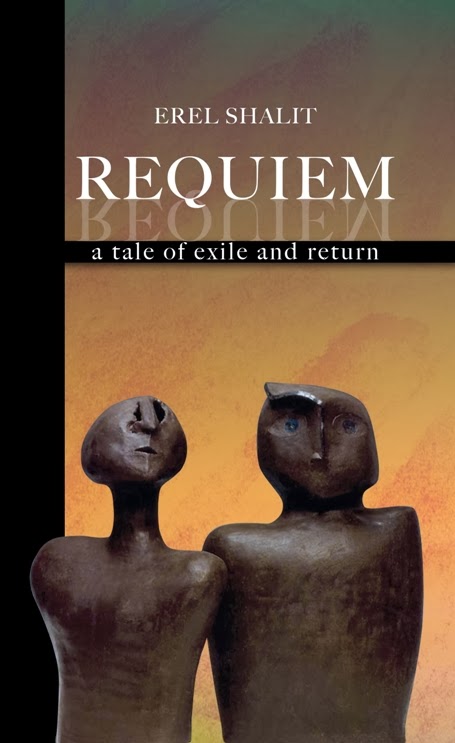
For the many who love Israel, and are open to the pain without falling into depression, and to the joy without flying too near the sun, and who want to learn in depth about Israel and be touched by its complexity, I highly recommend this wonderful and important book. Erel Shalit, Author of Requiem: A Tale of Exile and Return; and The Hero and His Shadow: Psychopolitical Aspects of Myth and Reality in Israel.

This ever-timely and powerful book [The Hero and His Shadow] delineates a psychological view of the collective processes that underlie the creation and development of the State of Israel and the relationship between the individual and collective processes up to the present time. (From Journal Of Analytical Psychology )

The title of this meditative book, REQUIEM: A Tale of Exile and Return', seems inappropriate when the reader begins Erel Shalit's story: if these are the thought patterns that are seething through the mind of our narrator Professor Eliezer Shimeoni as he prepares a lecture on the fate of Israel and the fate of the Jews, why then open with a 'Christian' mass for the dead? But then we are reminded that this is yet another work by the author of Enemy, Cripple and Beggar, and his life's work is not only as a Jungian Pyschoanalyst in Israel but he is also a man consumed with the great literature and the important writers of the world.

He begins this story simply enough as Professor Shimeoni reflects on the history of the Jews post WW II, ... 'That very moment he understood why the passionate longing for home had anchored in the Jewish soul, and why the sense of the soul's exile wandered like a shadow behind every Jew.' He quotes the words of Chaim Potok 'To be a Jew in this century is to understand fully the possibility of the end of mankind, while at the same time believing with certain faith that we will survive.' ...

... what Erel Shalit has accomplished in this very brief but intoxicating book is to provide a path for each of us to follow, wisely using the plight of the Jews during the last century as a matrix from which to judge our own individual exile and return. He is an accomplished thinker and he is also a very brilliant writer. —Grady Harp

Monday, November 18, 2013

Jan Wiener: Money Matters and their Impact on the Transference


Jungian Psychoanalyst Jan Wiener (SAP London), visited the Bar Ilan Jungian Psychotherapy Program, and gave a very rich and greatly appreciated lecture on “The World through Blunted Sight: Money Matters and their Impact on the Transference,” based on her chapter in Transformations: Jung's Legacy in Clinical Work Today (Cavalli, Hawkins, Stevns [Eds.])
And who, when it comes to the crunch, can live with a heart of gold?
(Carol Ann Duffy (1999) Mrs Midas from The World’s Wife)

Introduction 


The paucity of literature about the role of money in analysis is startling, particularly since the exchange of money through analytic fees is a central aspect of the frame in which an analytic relationship may develop. Shortly after qualifying at the end of the 1980s, a colleague and I wrote a paper called The Analyst in the Counting-House: Money as Symbol and Reality in Analysis (Haynes and Wiener 1996). The paper explored the neglect of any serious study of the role and meaning of money, reflecting with some puzzlement on the absence of due attention to fees and the meaning of money during training. The situation now, almost twenty years later, has not altered significantly, suggesting that for analysts money continues to be ‘the last taboo’ (Dimen 1994), and more difficult to contemplate even than the emotional subjects of sex or death. There is a remarkable lack of interest in the subject of money, or more likely, that thinking about money continues to represent an area full of conflicts and unresolved complexes for analysts who, it may be said, tend to suffer from ‘moneyblindness’ (Lieberman and Lindner 1987). Jacoby (1993), in a paper called, Is the Analytic Situation Shame-Producing highlighted the shame-inducing nature of the analytic relationship because of its artificial inequality, but without any reference at all to the part that the fee could play.

In his book, The World through Blunted Sight, Patrick Trevor-Roper (1970: 17-63), a Consultant Eye Surgeon, writes of the ‘unfocused image’ of people with poor sight and explores how optical anomalies, blunted sight as he calls them, can affect both perceptions of the world and the personality of those with visual impairments. He compares (ibid: 31) how Keats, who was known to be short sighted, focused on auditory subjects such as Ode to a Nightingale and On the Grasshopper and the Cricket, with Shelley, who had good vision and whose romantic imagery concentrated on the more distant evocations of the sky and the mountains. It is the unfocused image of money, its effects on the analyst and specifically on the transference and countertransference landscape with which this chapter is concerned.

From Ch. 5, Transformations: Jung's Legacy in Clinical Work Today


Thursday, November 7, 2013

Albert Camus, November 7, 1913 - January 4, 1960

Albert Camus
Nov. 7, 1913 - Jan. 4, 1960
The following is an excerpt from Camus' Speech at the Nobel Banquet at the Stockholm City Hall, December 10, 1957:

"Each generation doubtless feels called upon to reform the world. Mine knows that it will not reform it, but its task is perhaps even greater. It consists in preventing the world from destroying itself. Heir to a corrupt history, in which are mingled fallen revolutions, technology gone mad, dead gods, and worn-out ideologies, where mediocre powers can destroy all yet no longer know how to convince, where intelligence has debased itself to become the servant of hatred and oppression, this generation starting from its own negations has had to re-establish, both within and without, a little of that which constitutes the dignity of life and death. In a world threatened by disintegration, in which our grand inquisitors run the risk of establishing forever the kingdom of death, it knows that it should, in an insane race against the clock, restore among the nations a peace that is not servitude, reconcile anew labour and culture, and remake with all men the Ark of the Covenant. It is not certain that this generation will ever be able to accomplish this immense task..."

Saturday, November 2, 2013

Is Jungian psychotherapy an empirically proven effective method?


From The Red Book 

The following is the abstract of a recently published (October 24, 2013) open access paper by Christian Roesler, showing Jungian Psychotherapy to be effective, regarding several significant parameters.

The full study can be accessed at Behavioral Sciences (Behav. Sci. 2013, 3(4), 562-575).

Viggo Mortensen plays Sigmund Freud, and
Michael Fassbender plays Carl Jung in "A Dangerous Method." 

Evidence for the Effectiveness of Jungian Psychotherapy: A Review of Empirical Studies 
—by Christian Roesler 1, 2 

1 Clinical Psychology, Catholic University of Applied Sciences, Freiburg,
2 Faculty of Psychology, University Basel, Switzerland

Abstract: 

Since the 1990s several research projects and empirical studies (process and outcome) on Jungian Psychotherapy have been conducted mainly in Germany and Switzerland. Prospective, naturalistic outcome studies and retrospective studies using standardized instruments and health insurance data as well as several qualitative studies of aspects of the psychotherapeutic process will be summarized. The studies are diligently designed and the results are well applicable to the conditions of outpatient practice. All the studies show significant improvements not only on the level of symptoms and interpersonal problems, but also on the level of personality structure and in every day life conduct. These improvements remain stable after completion of therapy over a period of up to six years. Several studies show further improvements after the end of therapy, an effect which psychoanalysis has always claimed. Health insurance data show that, after Jungian therapy, patients reduce health care utilization to a level even below the average of the total population. Results of several studies show that Jungian treatment moves patients from a level of severe symptoms to a level where one can speak of psychological health.

These significant changes are reached by Jungian therapy with an average of 90 sessions, which makes Jungian psychotherapy an effective and cost-effective method. Process studies support Jungian theories on psychodynamics and elements of change in the therapeutic process. So finally, Jungian psychotherapy has reached the point where it can be called an empirically proven, effective method.

B. F. Skinner: Operant Conditioning

Friday, October 18, 2013

"Jung neglected in his native Switzerland?"


A brief look at the Jung Institute in Kusnacht, Zurich


Swiss journalist Raffaella Rossello presents a five minute video from the Jung Institute in Zurich, and asks if Jung is neglected in his native Switzerland.

She writes:

"Swiss psychotherapist Carl Gustav Jung may have been one of the founders of modern psychology but today he may be more revered abroad than in his homeland - something the privately-run Jung Institute hopes will change.

"With no Swiss university chair in Jungian psychology, the Jung Institute in Zurich is one of the few places where he is still taught. It also has regular semesters for foreign students and professionals. Not all students are psychotherapists: many are from the field of business or are in search of a deeper meaning in their lives.

"Jung helped found the Jung Institute in Zurich in 1948. Today, around ten students graduate every year, going on to become Jungian analysts and psychotherapists. There are other Jung-based institutes in Germany, Britain, the United States and Brazil.

"Jung’s analytical psychotherapy attached great importance to the unconscious. He elaborated concepts like the collective unconscious and the idea of "archetypes", basic patterns of human life which can be also found in myths and fairy tales. He developed a theory of complexes to help understand personality development and relationship conflicts.

"Jungian psychotherapy sees a psychological problem as an opportunity for the patient to engage in personal development, a process Jung called "individuation". (Raffaella Rossello, swissinfo.ch – SRF.ch. Additional images from a lecture by Erel Shalit at the Jung Institute )

Watch the video

It should of course be noted that there are Jung Institutes in many more countries than those mentioned above.

Sunday, October 6, 2013

The Hero and His Shadow: Psychopolitical Aspects of Myth and Reality in Israel, Revised Edition

A revised, third English edition of The Hero and His Shadow: Psychopolitical Aspects of Myth and Reality in Israel, has recently been published (2012) by Fisher King Press.


The book can be purchased at $22.00 directly from Fisher King Press, and from Amazon (notice that this, latest, revised edition, is cheaper than previous editions, and sells for $25.13).

Contents

Preface The Beggar in the Hero’s Shadow . . . . . .  xv
Acknowledgments . . . . . . . . . . . . . . . . . . . . . . . . . xxi
Chapter 1 Return to the Source . . . . . . . . . . . . . . . . 1
Chapter 2 From My Notebook. . . . . . . . . . . . . . . . . 11
Chapter 3 From Dream to Reality. . . . . . . . . . . . . . .33
Chapter 4 Origins and Myths. . . . . . . . . . . . . . . . . . 45
Chapter 5 From Redemption to Shadow . . . . . . . . . 55
Chapter 6 Wholeness Apart. . . . . . . . . . . . . . . . . . . 95
Chapter 7 Myth, Shadow and Projection . . . . . . . . 111
Chapter 8 A Crack in the Mask . . . . . . . . . . . . . . . 131
Chapter 9 The Death of the Mythical and 
The Voice of the Soul. . . . . . . . . . . . . . . . . . . . . . . 151 
Glossary . . . . . . . . . . . . . . . . . . . . . . . . . . . . . . . . .169 
Bibliography. . . . . . . . . . . . . . . . . . . . . . . . . . . . . . 173
Index. . . . . . . . . . . . . . . . . . . . . . . . . . . . . . . . . . . . 181

An excerpt from Ch. 9: 'The Death of the Mythical'

Man has wrested the myths out of the hands of the gods. When approached with humbleness, myths can give meaning to the world. Mythical Prometheus does extort the fire from the gods, but understanding the mythical meaning of his deed is more important than to act it out. Prometheus means forethinker, the one who thinks before. Promethean fire is the capacity to plan and make use of natural transformative energy, fire (which like everything archetypal is bipolar, and can thus be constructive as well as destructive), for the benefit of mankind, to create consciousness and acculturation.

Heinrich Fueger:
Prometheus brings fire to mankind

Prometheus’s brother, Epimetheus, thinks only afterwards, after having carried out the deed, when it often is too late. He was punished for his lack of forethought, and against his brother’s warning he all too easily accepted Pandora as a gift. As an artificial woman, as an artifact created by the master craftsman Hephaestus, she had no sense of Eros, of relatedness, and could unhesitatingly spread the poison of misery, disease and suffering.

Diego Velazquez: Hephaestus' workshop

Were Hephaestus alive today, he would probably be a computer freak, constructing artifacts of virtual reality. The boundary between reality and virtuality is becoming blurred. Man-made artifacts seem more real than actual events whose true nature we can no longer account for (cf. McLuhan 1996, Baudrillard 1994). Whereas in the past the media followed the event, now events take place where the camera is – even if the camera was there unintentionally, as was the case in the filmed assassination of Rabin. But it is a false and artificial tele-nearness (like tele-vision, vision from afar; or tele-pathy, i.e., pathos, feeling, from afar) a nearness from afar by which events lose their own reality. They become pseudo-events, as-if events. Jung (1964, p. 95) says,
As scientific understanding has grown, so our world has become dehumanized… Natural phenomena... have slowly lost their symbolic implications. Thunder is no longer the voice of an angry god, nor is lightning his avenging missile. No river contains a spirit, no tree is the life principle of a man, no snake the embodiment of wisdom, no mountain cave the home of a great demon. No voices now speak to man from stones, plants, and animals, nor does he speak to them believing they can hear. His contact with nature is gone, and with it has gone the profound emotional energy that this symbolic connection supplied.
There is an equally false nearness to personal and internal events. Unlimited media-exposure of man’s body and soul – sexual, dead, violated, raped – has little to do with closeness or freedom (Feldman 1997), but distances man from himself. There are no boundaries and no distance, no compassion nor perspective that can hold man’s experience together in a unified way. Through the Internet everything is made public, everything is open, and it is possible to learn how to assemble bombs and suicide (homicide) belts on-line.

Or, you write a letter, send it by e-mail (instead of snail-mail), and it is no longer yours. Sentences are added or deleted, “forwarded” and mass-distributed – without the need for consent. Where is discretion? Privacy? Where is dialogue in contrast to multilogue? Where is the poet’s private song, handwritten and learned by heart? Privacy is dismembered. Often people come to therapy to find privacy, and in privacy to find an outlet for their personal poetry.

Man’s evil may be his hubris, considering himself as an equal to the gods, interfering without restraint in nature’s work, and claiming godly rights. We do not know what evils may yet be unearthed by genetic engineering and computerized virtual reality, which is sometimes comprehended as more real than reality. Scientists have created electro-magnetic fields a million times stronger than what we are accustomed to, enabling fish and frogs to fly. Is that what man wants, or needs? Or, using transplants, scientists have exchanged brains, making birds behave like fish. What will the world look like when man and computer will be cloned together?

As Rosemary Gordon (1978) says,
there is light without visible fire; sounds and images heard and seen at a great distance from their source of origin; ... These and many other thousands of new wonders won by man through his own effort to understand, to control and to bend to his will and to his needs the forces of the universe in which he finds himself – all this has led him to dream that death also can be conquered.
And yet, while man may dream that death can be conquered, whether by science or by war, we are overwhelmed by death and deadly fears hitting back at us. As Hillman (1993, p. 111) in his powerful, poetic language, says,
Death lurks in things: asbestos and food-additives, acid rain and tampons, insecticides and pharmaceuticals, car exhausts and sweeteners, televisions and ions. Matter is more demonized than ever it was in the plague. We read labels of warning, feel invisible evils descend through the air, infiltrate the water, and permeate our vegetable sustenance. The material world is inhabited again; the repressed returns from the matter declared dead by Aquinas and Descartes, now as Death itself, and because of this resurrecting ghost in matter we are aware at last again of the anima mundi.
Awareness of the anima mundi, the world soul, may be the only viable alternative for a world on the verge of man-made apocalypse. But psycho-ecological awareness pertains, as yet, only to the few.

Myth-making means reaching into the creative depths of the unconscious, bringing forth the unifying symbols of the self, but man has wrested even the apocalyptic myth out of the hands of the gods. The apocalyptic myth forms the other end of the paradise myth of original, conflict-free wholeness. It is the myth of conflict between good and evil in which the latter comes to destroy the world as we know it, but is defeated by the forces of good, and the world is reborn. This would mark “the end of the present era, and the initiation of a new era of peace, harmony and general exaltation” (Ostow 1986, p. 107-108). However, the symbolic quality of the apocalyptic image changed as man seized it from the gods and from nature. Now man himself can cause his own actual apocalyptic destruction, and in so doing, kill the very idea and possibility of rebirth. If we define soul as the capacity to relate, imagine and reflect, then uncritical and unimpaired, narrowly ego-centered progress causes the atrophy of dreaming, mythologizing and symbol-formation.

Science and progress constitute our modern myth, with genetic engineering and the computer as central symbols of post-modern science. Freud (1932, p. 211) wrote to Einstein:
It may perhaps seem to you as if our theories are a kind of mythology ... But does not every science come in the end to a kind of mythology like this? Cannot the same be said today of your own Physics?
In past myths man was threatened by the forces of nature, the wrath of the gods, and the monsters of the netherworld. What remains today is mostly the grand sin of hubris, due to man’s one-sided consciousness.

In worship of the religion called science, the carcinogenic ego becomes ignorant of its shadow, intoxicating whatever lies outside the realm of restricted ego-consciousness. In the backwaters of civilization and unimpaired progress, the shadow rises against the ego and strikes back. This ego lacks feminine consciousness, the moon’s reflection and contemplation, as happens when scientists are given free hand without the reflective capacities of the anima, the soul, as occasionally carried by philosophers, psychologists and others. No longer does the wisdom of Sophia (in Hebrew hokhmah, חכמה)
cry aloud in the street; she does not utter her voice in the squares; she does not cry in the place of concourse, at the entrance of the gates; she is not listened to when she cries out “pride, and arrogance, and the evil way, do I hate.” (From Proverbs 1:20-21, 8:13)
The unrestrained dispersal of antibiotics, for instance over-injecting milk-producing cows, has weakened our immune system, which may be one cause of activating the AIDS-virus. Jung (1965, p. 360) says,
… [A]t the end of the second millenium the outlines of a universal catastrophe became apparent, at first in the form of a threat to consciousness. This threat consists in giantism – in other words, a hubris of consciousness – in the assertion: “Nothing is greater than man and his deeds.”
Howard Fox: Babel the fall
[find more of Fox's paintings]

And man’s consciousness is threatened by its very accomplishments, e.g. the computer, and therefore the unconscious tries to struggle with it by its ancient remedy – illness. So computers die from unknown viruses, some of them arising from the more primitive layers of our unconscious, for example “Friday the 13th virus,” which however is an all too weak panacea thrown in by the shadow of superstition. The language of a computer that has gone mad is as puzzling as when God put an end to hubris in Babel.

Jurassic Park

Steven Spielberg’s film Jurassic Park illustrates the dialectical and enantiodromic movement, whereby everything turns into its own opposite, between progression and regression. Relying on his ingenuity man acts God, and by computer-induced cloning he creates primordial images, dinosaurs, which then threaten to overtake man. What we might be creating for the future is the dinosaur-man, a weak link in human history, dependent on an intricate and vulnerable web of electro-magnetic fields and radio-waves.

Just imagine at what a loss man will be in the dark world of dead robots when the computers come to a standstill, causing for instance “worldwide banking chaos, air-traffic-control systems go dead, control chips open the wrong release valve in nuclear power plants, satellites get lost, deadly viruses kept under computer lock escape,” as a Newsweek feature exclaimed in lieu of the threshold to the new millennium. Due to denial of the shadow and lack of Promethean foresight, the year 2000 (Y2K) compounded into a threatening computerized calculation of year zero-zero, from which we could have woken up to “the day the world shuts down.”

In the post-modern era man is possessed by his own one-sided consciousness, having raised it to god-like proportions, not paying due respect to the compensatory efforts of the unconscious.

When we identify with the Self, as with any archetype, with wholeness, with Heavenly Jerusalem, then we create evil and hell. This is an evil of anonymity and perfection, and a hell of hubris, in which post-modern man has replaced the self, taken possession of the archetypes, and ignorant of the consequences he intervenes ruthlessly in the self-regulating psycho-ecology of the creation. This hubris of the mind may very well throw us deep into the globally overheated, yet freezing cold abyss of hell.

In evil man’s ego has lost its stamina, its strength and vigor, and fused with the collectivity of the mass, leading to an ‘abaissement de niveau mental,’ may it be mass-production, mass-psychosis or mass- murder, with due respect to the difference.

In hell, the God-image and the Self have been projected onto the ego, whether as worship of the leader, or of man’s mind.

Supreme evil arises when man uses his consciousness, which is based on differentiation and separation, for instance between good and bad, to split apart that which is not within his right to do, such as the selection in the death camps. Who is to live and who is to die, which race shall persist and which shall perish, are not within man’s moral realm of decision making. The ultimate image of man’s evil is his apocalyptic act of splitting the atom so that the enormous power hidden in that nucleus can be used for the destruction of humanity. Splitting apart is the extreme contrast of wholeness, and in nuclear destruction man’s consciousness truly becomes diabolic.

We have had a hundred years of psychoanalysis, and we have had half a century of atom bombs. India and Pakistan have joined in and others, such as Iran of the ayatollahs, are following, and man’s mind increasingly turns toward himself in unconscious self-destruction.

Saturday, September 7, 2013

The Orpheus Myth, Part II

“To Look Back or Not to Look Back,” That is the Question:
Clinical Implications of Some Mythical Injunctions Against Looking Back
—Eric Moss, PhD, Clinical Psychologist 

In our prior paper, “The Therapist as Musician: Ferenczi and his Use of the Orpheus Myth: A Guide for the Contemporary Therapist” (Leib and Moss, 2013), we drew upon the mythical figure of Orpheus and his musical sensitivities as a model for the clinical stance of today’s therapist, as did the pioneer psychoanalyst, Sandor Ferenczi.

In this paper I will look at the last, more puzzling, part of the myth, in which Orpheus disobeys the gods’ injunction, looks back at Eurydice and thereby brings disaster on himself and his lover, Eurydice. I will also look at another myth, that of Lot’s wife in the Old Testament, who, like Orpheus, disobeys an injunction not to look back – in her case, on Sodom - and so was punished by being turned into a pillar of salt. I will examine how these warnings not to look back are relevant for our work as psychodynamic psychotherapists.

Orpheus looking back at Eurydice

Why did the Greek gods, in the case of Orpheus, and the Old Testament God, in the case of Lot and his wife, specify these injunctions against “looking back”? Why did Orpheus and Lot’s wife ignore the injunctions? What are the implications of looking back or not looking back for us as human beings? And what is the relevance of this issue for psychodynamic psychotherapy?

Thoughts about “Looking Back”

Perhaps we should not be asking, which is better, to look back or not to look back? Rather, we should be asking a different set of questions: with which patients is “looking back” good psychotherapy, at what points during therapy is it helpful to do so and how, in fact, do we help a patient look back?

Most of us who are trained in a psychodynamic approach subscribe to the notion that “looking back” can lead to new understandings about oneself, which in turn can help in personal transformation, i.e., “move forward”. But, there is a downside to "looking back." It can sometimes lead to being stuck in the past. Freud (1914) himself dealt with this problem when he wrote about the repetition compulsion, i.e. certain people are stuck in the past and destined to repeat their early, self-destructive patterns. Later writers (Levy, M., 1998) have re-examined this tendency in some people to recreate old, neurotic patterns both inside and outside the clinical setting. They call this phenomenon “re-enactment”, and the bottom line is that such people are unable to leave behind old, self-destructive behaviors and move on with their lives.

In the Old Testament we find a metaphorical reference to this kind of “stuckness” in the story of Lot and his wife. In the legend, three angles come to Sodom and advise Lot, the one good man in the whole city, to take his family and flee before the city is destroyed. Their warning contains one stipulation: no one can look back. Lot’s wife disobeys the warning and for reasons open to interpretation looks back over the doomed city. For her disobedience she is turned into a pillar of salt (which some claim can still be seen today in the harsh, stone mountains surrounding the Dead Sea).

Lot's Wife Looks Back

Lot's Wife turned into a Pillar of Salt

If, as we wrote in our prior article, legends can be a guide for clinical work (Shalit, 2008; Rycroft, 1995; Ferenczi, 1932, Jung, 1996, McGurn, 1998), then it behooves us to wonder not just about the tragic ending of the Orpheus story but also about the punishment of Lot’s wife. It seems as though there is a universal injunction, appearing in different legends from different eras, against “looking back”. We can wonder, for example, what is the symbolic meaning in the universal story of Peter Pan of the fact that young Peter has no shadow (when according to Jungians, we all have a shadowy side about which we are less aware and usually don’t want to know about, i.e., don’t want to look backwards, or behind our backs at our shadows). What are the implications for our clinical work of “looking back”? This question is particularly relevant to psychodynamic psychotherapists because the injunction to not look back contradicts one of psychoanalysis’ basic assumptions, that looking back over our lives is an essential condition for transformation and growth?

Peter Pan: the Boy Who Had no Shadow

The urge to look back, and the injunction against doing so, has been related to differently by different writers. Freud himself wrote in his essay, “Remembering, Repeating and Working Through” (Freud, 1914) of the need to find solutions to old issues and move forward. Ferenczi wrote about the importance of creating a particular music-like attitude in the consulting room which can help the patient move out of his old patterns.

And of course it is not just psychotherapists who have pondered the meanings of the Lot story. In an article by David Heyd (2004), the author - a philosopher - understands the biblical story to be telling us to look forward in our lives, not return to a fixated past. He writes:
“Looking back is a deadening act. It surely goes against the evolutionary imperative: if chased by a predator, run away as quickly as possible: any attempt to look back may cause one to waste time, maybe be hunted down.” 
“We are not built so as to simultaneously look back and move on.”
“Moving forwards is flowing on with time, whereas looking back, being stuck with the past, is an attempt to abolish time by freezing it.” 
“The future-oriented perspective presupposes the human capacity to change, to transform ones own personality and the world.”
Lot and his daughters did not look back, he points out. They went on to survive and even have sexual lives, however perverted (He slept with his two daughters). For Heyd, looking forward is the way to revitalization and survival.