Tuesday, December 18, 2012

95-year-old letter reveals Kafka's mouse phobia


Haaretz journalist Ofer Aderet reported the following on December 9, 2012:

“A rare letter written by Franz Kafka 95 years ago has been purchased by the German Archive of Literature, at a public auction held this weekend. This letter was apparently part of the bequest of Kafka's friend Max Brod. A court recently ruled that this collection of manuscripts should be transferred to the National Library in Jerusalem, as Brod had bequeathed in his will.”

“The sale took place last Friday at the Kaupp auction house in Sulzburg, Germany, with the German archive managing to raise the required 96,000 Euros from private donors, wishing to remain anonymous. The four-page letter was written by Kafka to his friend on December 4, 1917, in the Czech town in which he was residing with his sister Ottla while recuperating from tuberculosis. In the letter, Kafka describes his fear of the mice lurking in his apartment, admitting that his phobia is irrational, and that psychoanalysts should look into the source of this fear. He suggests keeping a cat as a solution that is preferable to using mousetraps.”

While the contents of the letter have been published, “in books as well as on the Internet, the letter had not been publicly displayed before. The letter had changed hands several times over the last 30 years, passing between different private collectors. The German archive has now added the letter to its large collection of Kafka writings, and will put it on public display in April, in a special exhibition.”

“In all likelihood, the letter was part of the Max Brod bequest, which has recently been contested in an Israeli court. The parties to the dispute were the German Archive of Literature, the National Library in Jerusalem and the daughters of Max Brod's personal secretary.”

“A family court in Tel Aviv recently ruled that the entire Brod bequest be transferred to the National Library in Jerusalem. An attempt by lawyers representing Hoffe to obtain a temporary injunction to delay the transfer has failed, but they plan to appeal this ruling and the main decision.”

Mice generally refer to the powers of darkness, “gnawing at the root of the Tree of Life.” They evoke anxiety and “nocturnal worries,” as Marie-Louise von Franz says. Or, in Kafka’s words,
My reaction towards the mice is one of sheer terror. To analyze its source would be the task of the psychoanalyst, which I am not. Certainly, this fear, like an insect phobia, is connected with the unexpected, uninvited, inescapable, more or less silent, persistent, secret aims of these creatures, with the sense that they have riddled the surrounding walls through and through with their tunnels and are lurking within, that the night is theirs, that because of their nocturnal existence and their tininess they are so remote from us and thus outside our power.
Kafka provides a particularly touching and simultaneously powerful description of complexes in his (Never sent) Letter to Father. He was unable to uphold his own separate identity vis-à-vis his domineering father. It is amazing how in relationship to him the otherwise so highly cognizant Kafka suffered from a lowering of awareness, abaisemênt de niveau mental. Kafka says, in the beginning of his letter to father,
You once asked me recently why I claim to be afraid of you. I did not know, as usual, what to answer, partly out of my fear of you …,
And later he writes,
I acquired in your presence … a hesitant, stammering manner of speaking, and even that was too much for you … I could neither think nor speak in your presence.
Kafka is afraid and the fear paralyses him. The terrifying complex – Brod speaks of an “infantile complex” – directly attacks consciousness and detracts available energy from the ego. When in the grip of the complex, ego-consciousness and identity are impaired. Feeling is then no longer a value-judgement, and affect and sensitivity overtake us. We are overcome by fear, rage, or the like and tend to project.

Kafka feels his father exposes him by “indiscriminately” speaking about his son in front of others. He sees himself as the hardworking father who sacrifices all to his ungrateful son. The feeling of being exposed is common when a complex is activated, and complexes are activated by exposure.

Excerpted from The Complex: Path of Transformation from Archetype to Ego, ‘Frantz Kafka’s Letter to Father’ (pp. 92-103).

Thursday, December 6, 2012

Kriegskindheit, War Childhood in Germany

Kriegskindheit, a new book by Helga Thomas


Helga Thomas is a Jungian psychoanalyst and writer in Germany, with whom I have cooperated for a decade. We have worked together with the Bulgarian Jung Society, where Helga teaches, supervises and gives analysis.

The Bulgarian Jung Society provides a forum for the study, training and development of Jung’s analytical Psychology. I consider myself fortunate to have been involved with this group of devoted professionals. As liaison person between the International Association of Analytical Psychology (a position now held by Joann Culbert-Coen), I have witnessed a tremendous development taking place over the years. [For those interested, below find a summary of my presentation on the subject at the 1st European Conference of Analytical Psychology, held in Vilnius in 2009]

During my visits once or twice a year, I have experienced the warmth and openness, coupled with insight and reflection, that characterizes the Jungian psychotherapists and the Bulgarian Jung Society. This has also provided an interesting meeting ground between Helga as a German and me as an Israeli, an example of which was a seminar on the shadow that we gave together a few years ago, which inevitably was held in the shadow of history.

Helga was born in Berlin in 1943, and spent her childhood, until the age of fifteen, in the Soviet Occupation Zone. Her new book, Kriegskindheit, recently published in German and Bulgarian, is an attempt to work through her personal war childhood.


Back Cover Text

The mere act of writing down my recollections, which in part are already a result of working through these recollections, will not suffice. It is important for Erel to hold the letter that is addressed to him in his hands and to read it from the beginning all the way to the end. Yet, even that does not suffice. As I am sitting here in Sofia, I realize it does not suffice either for me to keep telling about it. No, not at all. I don’t need a person to listen to my story. Other people need to read my letter to Erel so that through my story they will be able to reconnect with their own deeply hidden (family) stories. I am visualizing images of well protected, beautifully decorated inner spaces… A new process has begun - not only inside myself.


From the Epilogue

Dear Erel,

I realize I have to add an epilogue. Yesterday, after finishing the concept of the letter to you, I read further in Sabine Bode’s book Grandchildren of the war. Heirs of the forgotten generation. In my own report it becomes clear how parents were silent and now you cannot ask them anymore.

I am a child of the war, not a grandchild, but I feel the same, and so I stay silent just as well… I don’t know whether this causes suffering for my children. I think I have told them about it and I have read good children’s books on this subject to them… sometimes all the three of us wept…

And Stefan asked his Granddad whether he had ever shot anyone to death in the war. My father responded honestly that he didn’t know. Only at the very end of the war he was in combat at the front. He doesn’t remember anymore because he was so badly injured that he almost died. It could have been, but he hoped that it was not the case. The truth? Repression? Illusion? A response appropriate to a child? His honest endeavor and concern at his grandchild’s question were palpable. I would never have dared ask this question! Perhaps for fear of being told: Don’t ask such a stupid question, of course I did, it was wartime, you would have used your gun as well! – and I would have been silent, fearfully, ashamed. Later I was ashamed that I had not asked.

***************************

Erel Shalit: Analytical Identity and Culture - Bulgaria

At the First European Conference of Analytical Psychology, “Dialogue at the Threshold between East and West: Past, Present and Future of Cultural Identity,” held in Vilnius, Lithuania, Dr. Shalit emphasized the need “to account for social, cultural, political and historical factors; cultural complexes and social complexities, as well as the wisdom and the psyche of the particular geo-psychological location,” in the development of psychotherapy as a profession. He outlined five factors to be accounted for:

I. The first factor pertains to the change in collective consciousness.

Liberation from a totalitarian regime, from an oppressive Father as dominant of the social collective consciousness, as well as its internalization in the mind of the individual, is not only a political process.

The psychological process to free oneself from both fear as well as reliance on external authority takes longer than the actual change of regime.

The way the principle of Father dominates consciousness, is reflected in the transference on to visiting analysts, as regards for instance reliance, expectation, apprehension and idealization, ambivalence, dependency vs. independence, etc.

II. The second issue is related to the first: While the unconscious is, axiomatically, the antithesis of consciousness, when the ideology of a prevailing, oppressive social collective consciousness claims that “matter is the beginning and the end of reality,” the courage it takes to turn to the soul and the unconscious is particularly noteworthy.

This personal courage and individual path is something that deserves profound respect. Initially I did not realize the extent of their courage, in spite of my sense of affinity to my Bulgarian friends and colleagues, because it was hidden behind their humbleness, and perhaps their respect and reliance on foreign authority. No doubt, though, that the senior members of the Jung society have truly been pioneers – the brave founders of the enterprise of introducing Analytical Ψ, with visiting analysts like myself and others as devoted assistants.

III. Third factor: with freedom and renewal come loss and abandonment – as Jung has stated, abandonment is a necessary condition, not just a concomitant symptom, of development toward independence. Bulgaria suffers from emigration, many young are leaving, many of whom are extremely talented. This means that you experience not only loss, but also have to ask yourself, how come you stay. What is it that binds you, prevent you from leaving – is it fear and failure that hold you back, or does some sense of motivation and meaning beyond your personal welfare induce you with commitment and devotion?

I believe one is confronted with questions pertaining to the relationship between the individual and society, in a way that is qualitatively different from many Western societies.

IV. The fourth issue has to do with the proximity to dreaming and the unconscious. There may be less layers of asphalt, of seemingly sophisticated defenses, that cover and smooth the surface of Mother Earth. She lies barer than in so-called developed countries. Therefore, the access to deeper layers of the soul is often more direct, more immediate. Consequently, we need to consider diagnosis in its cultural context.

Many years ago, as director of a community mental health clinic, I realized the difference between someone who shares suicidal thoughts with the social worker or the family doctor, vs. someone who expresses suicidal inclinations at the psychiatric hospital’s emergency room – it should of course all be taken seriously, but it may mean and indicate very different things.

Likewise, what in one society may be a psychotic manifestation of an ego overwhelmed by archetypal material, this may in another cultural setting reflect an openness to the collective unconscious and the archetypal realm.

V. My last point is that providing education of a profession that previously did not exist in a particular society creates, among other things, narcissistic fear, inflatedness and confusion – for instance, how many pioneering therapists or analysts do not believe that they are impostors, with only the persona of a therapist, without the weight of the ancestors, the forerunners, the traditions and formal learning, lacking the trust in an ego anchored within one's Self?

Out of the massa confusa, a wide array of therapeutic approaches emerge, and there is a lack of clarity of concepts – e.g. as regards analyst vs. therapist.

In such a fluid state of affairs, it is important to enable the development of a firm basis of skilful therapists, with an identity rooted both in their own culture as well as in analytical psychology.

Monday, November 12, 2012

Does Israel need a cease-fire agreement with Hamas?

Cease-fire yes, agreement no

The Hebrew will follow the English        העברית לאחר האנגלית

Attack on Tel Aviv bus
Hamas is a terror organization, openly aiming at the destruction of Israel, firing missiles with the intention of injuring and killing civilians, victoriously triumphant the more damage is inflicted on the detested enemy, whether child, man or woman, or the elderly.

Their goals remain unchanged, so any commitment from their side, as they have themselves stated, has very little value, and is valid only as long as it serves their purposes, for instance rebuilding their arsenal of weapons.

Yet, the ruling Palestinian Hamas government in Gaza carries responsibility of its own acts.

Israel should of course not act in an inhumane way and prevent the supply of electricity to Gaza, the greater part of which is supplied by Israel.

Execution of suspected collaborator in Gaza

The decision regarding supply of electricity should be in the hands of the Palestinian government in Gaza.

At the sounding of the “Red Color” alert, Israeli citizens have 15 to 30 seconds to find shelter from the missiles fired from Gaza.

I suggest declaring an exact date when the Red Color Alert will be connected to the switch which activates electricity supplies. From that moment, electricity will automatically be cut for 15 seconds at the firing of the first missile.

School in Ashkelon hit by rocket

Each additional missile will double the time of the electricity cut. The third missile will cut electricity for one minute, and after the tenth missile, electricity is cut for two hours and eight minutes.

Consequently, the length of the electricity cut will be determined entirely by those who fire rockets, or, more correctly, for the government that controls Gaza. They will know that the next rocket will automatically cause an electricity cut double the time of the previous one, and be fully in control of supplies – by the twelfth missile it will be eight hours and thirty-two minutes.


האם ישראל באמת זקוקה להסכם הפסקת אש עם החמאס?

החמאס לא מתכוון לוותר על מטרתו להשמיד את מדינת ישראל, לכן להסכם אין הרבה ערך.

אך כממשלה השולטת במדינת עזה, היא אחראית להשלכות פועלה.

מאחר ואין להגיב באופן לא הומני ע"י ניתוק החשמל, כאשר ישראל מספקת חלק נכבד מהחשמל, יש להעביר החלטת ניתוק החשמל לממשלת עזה.

בהשמע אזעקת צבע אדום, לזקן ולילד בין 15 ל-30 שניות למצוא מחסה.

אני מציע להכריז על מועד חיבור התרעת צבע אדום למתג שמספק חשמל לעזה. מאותו רגע, החשמל ייפסק אוטומטית עבור הטיל הראשון ל-15 שניות.

כל טיל נוסף יכפיל את זמן ניתוק החשמל. לאחר שלושה טילים, לדקה, לאחר הטיל העשירי, שעתיים ושמונה דקות.

לפי כך, אורך הפסקת החשמל לחלוטין בידיהם של יורי הטילים, או יותר נכון, לריבון בעזה, שיכול להחליט אם ירצה במו-ידיו, לגרום להפסקת החשמל לעזה בהכפלת זמן הניתוק לעומת הטיל הקודם. כך יידעו באופן מדויק מה השלכות שיגור כל טיל.

Saturday, November 10, 2012

Whose words are empty, whose eyes do not see?


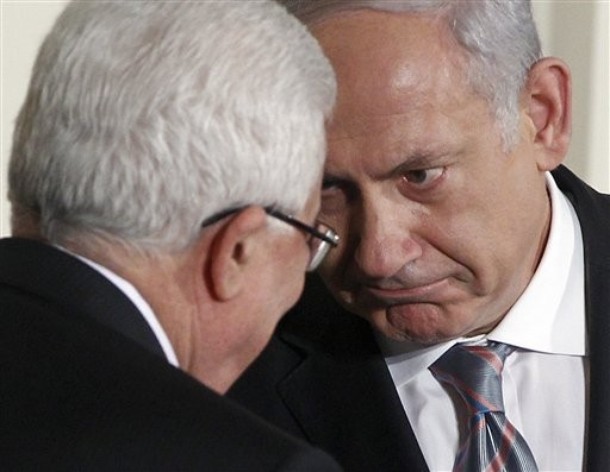
Palestinian National Authority President Mahmoud Abbas appeared recently on Israeli TV. His objective, as he said, was to influence Israeli opinion.

He declared that for him, the 1967 borders (well, they aren’t really borders, but the reference is to the cease fire lines 1948-1967) with East Jerusalem as its capital is Palestine, while the rest is Israel.

He also said that although he is a refugee from Safed in the Galilee, he had no intention to return to live there. This caused protests among Palestinian, assuming Abbas was relinquishing their so-called ‘right of return.’

However, Abbas soon clarified, in Arabic, that he has not at all relinquished this Palestinian claim.

President Shimon Peres responded by saying that Israel does have a partner for peace, while PM Netanyahu quickly dismissed Abbas’s words as empty.

True, when Netanyahu agreed to President Obama’s request for a settlement freeze to bring the Palestinians back to the negotiation table, Abbas refrained from returning to negotiations.

Following in the footsteps of Arafat’s infamous rejection of a peace agreement in 2000, and then opening a five year war of terror against Israel, Abbas later rejected then PM Olmert’s most far-reaching peace offer.

Leading up to and following its independence in 1948, Israel was attacked by several Arab states, and hundreds of thousands of Arabs fled. Many were called to do so by their own leaders, expecting a quick return, and many fled in fear.

Some had lived in the land for many generations, while others had arrived only a few years earlier (which is the reason that the UNWRA definition of a Palestinian refugee is a person who had lived in the area for two years).

Where the Arabs had the upper hand, the fate of the Jews were, to say the least, not fortunate.

In Palestinian counting, the off-spring of these refugees, and the spouses of their off-spring, and many needy in areas outside of what became Israel, are today counted as refugees, numbered in the millions, claiming a right to settle in Israel (which would then become part of a Palestinian State; according to the Palestinian Charter, the Jews are to leave).

Rather than resettling the refugees among their Palestinian landsmen, and creating a constructive identity for their off-spring, as has been the case in other parts of the world (including Jewish refugees from the Holocaust, and Jews who were forced to flee Arab countries, whose off-spring have shed any identity as refugees), the Palestinian national identity is permeated with a sense of being victims and refugees. The destruction of Israel has for many Arab leaders taken precedence over the building of Palestine.

So Netanyahu may be right.

But he is not very wise.

Netanyahu himself has not done anything to move toward reconciliation between Israel and the Palestinians. He has not taken his own words - reluctantly adhering to the idea of two states for two peoples, Jewish Israel and Arab Palestine - seriously. He has not done anything constructive, nothing to enable the renewal of negotiations. Every opportunity is taken to build more settlements, rather than caring for housing within Israel proper.

Mahmoud Abbas is an experienced politician, well aware of his intentions as well as his difficulties. He obviously sent out a trial balloon when he said he did not intend to return to his native Safed, touching on the Palestinian core issue, inevitably evoking protest and ensuing denial.

A more open-minded and creative leader than Netanyahu would respond affirmatively to Abbas’s courage to touch the most sensitive of issues for the Palestinians. In spite of Abbas representing only one of the two Palestinian governments (the other one headed by Ismail Haniyeh in Gaza), he should invite him to immediate negotiations, declaring a willingness to freeze settlement activities beyond the security fence the moment negotiations begin (i.e., not as a precondition, but as an immediate goodwill gesture).

Netanyahu might remain in power after elections, January 22, 2013. Whether he or someone else will form the government, President Obama will have an opportunity to play an authoritative and instrumental role, e.g. by appointing a combined team of Bill Clinton and Tony Blair – both respected by all sides of the involved partners – to parent negotiations between the hostile brothers, together with Dennis Ross, who recently has presented constructive ideas for a peace process.

This might be the ultimate timing - both to ensure that Iran will not attain nuclear weapons, starting a nuclear race in the Middle East, and for the Israelis and Palestinians to get back onto the track towards future neighborly relations.


Requiem: A Tale of Exile and Return is on sale now for $14.95, and Enemy, Cripple, Beggar is on sale now for $19.95 or $30.00 for the pair when ordered directly from the Fisher King Press. You can also order The Hero and His Shadow: Psychopolitcal Aspects of Myth and Reality in Israel directly from Fisher King Press. Phone orders welcomed, Credit Cards accepted. 1-800-228-9316 toll free in the US & Canada, International +1-831-238-7799


Download the
Fisher King Press Newsletter
Fisher King Press Catalog of Publications
Fisher King Press Price List and Order Form

Saturday, October 27, 2012

Transiency and the Culture of Plastic


Transiency and the Culture of Plastic

Our post-modern era is characterized by increasing dislocation and fragmentation. The sense of permanence and constancy of old, is exchanged for temporality and fluidity, i.e., a condition of transiency. Not only do cars, trains and planes carry us across continents faster than most people once could imagine – perhaps with the exception of Jules Verne and a few others, but we travel cyberspace in zero-time. Speed in the era of transiency, makes the soulful road of the wanderer seem hopelessly obsolete.

Likewise, we are over-exposed to stimuli, information and images: once upon a time we would sit down and quietly look through the pictures of the past, the reminders of our childhood, enjoy a memory, recall days long gone by, share thoughts and feelings from a time that could be brought alive by the one photo from that day. Today, we are flooded by digital photos, numbered almost into infinity. Rarely do we remain more than seconds to glance at each photo, and even more rarely do we return to them – often unaware that what warrants no return, loses its soul.

It is by reflecting on the events in which we partake that we induce them with depth and meaning, but speed and superficiality seem to supersede depth and reflection.

We are flooded with images, but the onslaught of external images disrupts the flow of internal imagery. Excessive exteriority impinges upon the imagery of interiority. Read more here, or at the Fisher King Press Newsletter.

If you are interested in reading other book chapters, encyclopedia entries, and published papers of mine, you will find a compilation at OPEN ENDS.


Certain entries require login. Username and password can be purchased by using PayPal, or at Hebrew Psychology ($15, 46.75 NIS).

Among the articles, book chapters and encyclopedia entries you can access by login are:

-- Erel Shalit, Silence is the Center of Feeling
-- Jerusalem as Metaphor
-- Worship of Transiency
-- Dreams in the Bible
-- Sacrifice of Isaac
-- Jerusalem encyclopedia entry
-- Story of requiem
-- Self, Meaning & the Transient Personality
-- Recollection and recollectivization
-- lakes of memory - review of adagio & lamentations
-- Jerusalem - Psyche & the City

-- with James Hall, The complex object


Eid Mubarak


'Above all praise', by Benjamin Shiff. Read more about the artist,
and see
 more of his wonderful paintings.

I wish my Muslim friends, and all Muslims, a Blessed Eid, Eid Mubarak, a Blessed Feast of Sacrifice (Eid al-Adha).

The feast commemorates Abraham’s (Ibrahim) willingness to sacrifice his first-born son, Ishmael, who was sent away together with his mother Hagar.
For many Muslims, not Isaac but Ishmael is the son at the center of the drama of the Akedah, the near-sacrifice:

“Behind the Wall of Tears, the timeline descends from the mosque to the Temple of Jupiter to the pigeon-sellers, to the Temple and yet the one before, right down to the altar of worship and sacrifice. It is here, at the point of the needle, where history and legend merge at the very hub of indistinguishable uncertainty, that the awe-inspiring drama of the sacrifice of Isaac supposedly took place. What terrifying, formidable lesson did God want to teach Abraham, when he told him to go forth to the land of Moriah and offer his son Isaac for a burnt offering?

“Abraham does not question his God, with whom he has sealed a covenant. He binds his son Isaac and lays him upon the wood of the altar he has built. The son submits to the father, Isaac to Abraham, and Abraham to God – a weakness of character? Hardly, since Abraham has already proven his capacity to leave his father’s house, and no less, when he argues and negotiates with God to spare the sinners with the righteous in Sodom.

“Perhaps Abraham did not ask any questions because this was simply his adherence to the ancient practice of surrendering the first-born to the gods? The Scriptures tell us Abraham offered up his “only son Isaac.” Consequently, some Muslim scholars claim that not the little laughing one was to be sacrificed, but Ishmael the first-born, who was the only one who could be the only one of Abraham’s sons. Did not the God of compassion hear the lad who cries of thirst, expelled from his father’s house into the desert?

“Eli Shimeoni wondered, if Abraham argued with Terah when he left his father’s house and went forth to the land unto which God would lead him? What doubts pounded in his heart when he put the burnt offering upon his son, for him to carry the wood, some say cross, of his own sacrifice? Was this the wood of the sacred grove that so meticulously had to be cut down, as when Yahweh commands, “build an altar to your God upon the top of this rock, and offer a burnt sacrifice with the wood of the Asherah which you shall cut down?” Without being asked, was little Isaac to carry the Lord of Hosts’ mighty struggle against Asherah, the goddess of the grove, on his shoulders? Was he to be sacrificed, bound to the mother of the morning star and the king of the evening, the mother of the twin brothers Shahar and Shalem – yes, Shalem, the Canaanite king-god and mythological founder of Ir-Shalem?

“The Biblical account is the skeleton of a drama, for the reader to flesh out with feelings, and to be dressed in the garb of interpretations. There is not a word of dialogue between father and son as they ascend the mountain of worship – is it the awe of fate, the brevity of speech when walking straight into inescapable tragedy, or is it the focused silence when you walk the line, stretched to its limits across the cosmic abyss? Or maybe it is the chilling coldness of mechanically executing daily movements, when you submit to invincible catastrophe, as when rather than waiting for the five o’clock bus, you are lining up at Umschlagplatz?

“Is this the story of the Jews’ submission to the father, in which the instincts of the sons bend to the fathers’ discipline, with the rabbis as a Halakhic fortress cementing the power of God, the Father? Or is it the callous need of fathers to castrate their sons, who on the one hand embody their future and bring the prospect to “multiply exceedingly,” but who on the other hand, by their very prime and youth, seem to hold the sword that separates the future from the past, determining who by water and who by fire, who will rest and who shall wander, as the poem recounts our disastrous fate on atonement day?

“In some legends, he recalled, Satan tries to prevent Abraham from carrying out the sacrifice. In his role as adversary, instigating toward consciousness, Satan introduces some healthy doubt into what otherwise seems to be passive submission. But in Biblical reality, it is only when the angel calls upon Abraham not to slay his son, that he lowers his hand, and puts away the knife with which he was ready to sacrifice his beloved son. He has passed God’s test of devotion, and the ram is offered in place of Isaac.

“But has he passed the human test of devotion? (From Requiem, p. 43ff)
Are we perhaps obliged to ask ourselves, once a year, or every day, “Do i pass the human test of devotion?”

Sunday, October 14, 2012

Kafka’s unpublished manuscripts – soon to be revealed!


After five long years, in what seemed frightfully similar to the eternity of a Kafkaesque Trial, Judge Talia Pardo Kupelman (K.) wrote,

"This case, complicated by passions, has been argued in court for quite a long time across seas, lands, and times. Not every day… does the opportunity befall a judge to delve into the depth of history as it unfolds before him in piecemeal fashion," opening, she said, "a window into the lives, desires, frustrations and the souls of two of the greatest thinkers of the 20th century."

The judge ruled that the library of Max Brod, Kafka’s close friend, be transferred to the National Library, in accordance with his wish and intention.

After his death in 1968, Brod’s secretary Eva Hoppe kept, and sold off, some of the important manuscripts. The remaining ones include, as Ofer Aderet writes in Haaretz, Brod's unpublished diary, notebooks with Kafka's writings, and correspondence of Kafka and Brod, among others with Stefan Zweig and Shin Shalom.

Remebering the death of Max Brod, 1968

An excerpt from Requiem - A Tale of Exile and Return:

Without forewarning, Eli Shimeoni found himself transposed more than forty years back in time, walking down Tel Aviv’s King George Street, sometime late winter or very early spring, if his memory did not escape him. He headed for Pollack’s antiquarian bookstore, which even as a young teenager he frequented as often as he could. He felt the thick and heavy air of old books was rich and wise, a comfort and a relief, a refuge from breathing the thick and heavy air of home, which he needed to escape. Those days, after the war of the days of creation, arrogance was in the air. Everyone seemed to fill their lungs with victory and invincibility. But young Eli kept breathing the air of threat and fear, doubt and concern, the compressed air that lay squeezed like the dust in the corners of his room and under his parents bed sofa.

The old bookshop granted an escape into a world of history books and timeworn atlases in which he could sail across the sea of time and continents, where fear and excitement and heroism were free and asked no price. It was a world of books that he could browse but never buy, an odyssey that could only be traveled, but never owned.

Sometimes his mind would play out heroic fantasies. However, unlike his school mates, he was neither the warrior who saves his country, nor the soccer player who leads his team into the world cup final, triumphantly circling the field wrapped in the national flag while an ecstatic crowd sings the anthem. No, his libido was lit by a raging fire, threatening the shop and its treasures from Heine to Freud as if this was Bebelplatz, May 1933. In sharp contrast to his usually slow, pale and shy ways, he would courageously run into the fire and save the most valuable of all the books and atlases and manuscripts.

But that grayish winter day, as he stood outside the window to see if everything was in place, his eyes caught sight of a letter, which must have been put there only days ago. He could not make out the German writing, only that it was addressed to Dr. Brod. His mouth got dry, searching for saliva, his heart pounded and his legs trembled as he entered the store to inquire with the old salesman who might have been much younger than he seemed to be behind those round glasses that always slipped down his nose, who told him that Brod had passed away only a few weeks earlier. Those were years that young Eli would swallow every scrap of paper or piece of knowledge or story by Brod or Kafka. He had even read Brod’s novel Tycho Brahe’s Path to God; though he had found the language difficult, or perhaps simply was too young to grasp, he had been intrigued by the conflict between the old and the new, past thoughts and new ideas. But he felt particularly grateful to old man Brod for being wise enough not to follow stupid Kafka’s request to burn his books – how could he want his books to be burned!!! Of course he could not know that books would be burned less than a decade later, but for sure he knew about Hananiah ben Teradion, the second century religious teacher, who broke the Roman law against teaching the Scriptures. When burned alive with his beloved, the forbidden Torah Scroll, he said to his pupils, “I see the scroll burning, but the letters of the Torah soar upward.”

Young Eli admired the courage of Dr. Brod, but could not really forgive Kafka for wanting to burn his books – only, perhaps, that he had asked in such a way that Brod would understand he did not really mean it. Eli had even seen old uncle Brod once or twice in the street, and tried to follow him without giving himself away, but was too scared that Brod would notice him and scold him and embarrass him and bring him shamefully home to his parents, so he had always made it the other way on Hayarden Street corner Idelson.

He often wondered about the friendship between Franz and Max, and so much wished that Franz would not have starved to death at such a young age – just imagine if he would have lived with Dora across the street of Uncle Max! Write one more book, please, just one!

Read Requiem (English; Hebrew).

As mentioned in Requiem, one of Kafka’s manuscripts that may be found among the thousands of pages in the boxes in the neglected apartment with abandoned cats in Tel Aviv’s Spinoza Street may well be the story - according to leaks, likely by a foreign expert on the Kafka material - about a rat, one among many in Prague’s sewage system. But “this rat had a complex, golden mechanical device, a precise micro-cosmos built into its mind.”

The rest is a story yet to be told, though some of it, as far as we have been able to gather, appears in Requiem (p. 57ff).